










Why Websites Think You Are a Bot: Diagnose the Right Cause

Lucas Mitchell
How to use CapSolver
20-Feb-2025
TL;DR
- A website can challenge a legitimate visitor when browser behavior, network traffic or a site rule triggers additional verification.
- A 403 response alone does not prove that a CAPTCHA is present; a 429 response calls for rate-limit handling.
- Start with browser compatibility, JavaScript, cookies, extensions and network context before repeatedly refreshing a challenge.
- Site owners should inspect their own security logs and use documented test configurations for automated QA.
- The Python decision tree below was tested with synthetic responses and does not identify the hidden rule behind a real site's decision.
Seeing “verify you are human” does not mean you intentionally did anything wrong. Websites make access decisions from signals available to their security systems, and a legitimate browser session can encounter a challenge. The useful next step depends on what the page actually shows: a verification widget, a rate-limit message, a sign-in requirement or a general access refusal.
For an ordinary visitor, this guide starts with browser and network checks. For a developer testing an owned or explicitly authorized workflow, it then turns the same observations into a small diagnostic decision tree. CapSolver supports documented CAPTCHA handling for authorized automation, but a solving integration only applies after the workflow has identified a supported challenge and confirmed the expected page state afterward.
Why might a website challenge a legitimate visitor?
A challenge can result from the browser environment, traffic associated with the connection or a rule configured by the website operator.
Google's explanation of unusual traffic messages includes automated traffic associated with a network. That does not establish why an unrelated website challenged your session. Treat the specific site's message and support information as the starting evidence.
Cloudflare lists browser and connection conditions in its challenge troubleshooting guidance. An extension that interferes with a required script, an unsupported browser or an unstable connection can affect challenge completion. A visitor usually cannot see the operator's complete decision logic.
Avoid diagnosing from the status code alone
A 403 response means the server understood the request but refused it, as described in the HTTP 403 reference. It does not name the rule that caused the refusal. A successful HTTP response also needs content inspection: the returned page may still be a verification screen instead of the requested application result.
What should you check in a normal browser?
Check whether the browser can complete the site's intended verification flow, changing one relevant condition at a time.
- Read the exact message and record the time, URL and any request identifier shown. Do not post cookies, tokens or account details in a support thread.
- Update to a browser supported by the site and confirm that required JavaScript and cookies are allowed for that site.
- Temporarily test with extensions that alter page scripts disabled, using a separate browser profile if that makes the comparison easier to reverse.
- Check whether a workplace, shared network or VPN is relevant to the site's own troubleshooting advice. Follow your organization's network policy rather than repeatedly switching routes.
- If the page reports a rate limit, stop the repeated requests and follow the site's delay guidance. If the issue persists, send the operator the non-sensitive diagnostic details.
Preserve useful evidence before clearing site data
Clearing cookies may sign you out and remove session evidence. Record the visible error first, then use a targeted site-data reset only when it fits the site's guidance. Repeatedly refreshing or resetting the session can make it harder to tell whether a change helped.
An extension is a separate integration choice for permitted workflows. Review the CapSolver browser extension product information before assuming a particular browser setup is supported. Ordinary visitors should use the site's intended verification and support path.
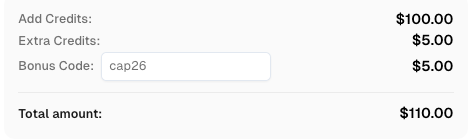
Redeem Your CapSolver Bonus Code
Boost your automation budget instantly!
Use bonus code CAP26 when topping up your CapSolver account to get an extra 5% bonus on every recharge — with no limits.
Redeem it now in your CapSolver Dashboard
How can developers classify the next action?
Combine the response status with positive challenge evidence and an application-specific completion assertion.
The following decision tree is a local diagnostic fixture for authorized QA. Save it as diagnose.py and run it with Python 3.11 or later. It makes no HTTP requests and does not infer a site's private security rules.
python
import json

def next_step(status, *, challenge_evidence=False, business_assertion=False):
    if status == 401:
        return 'check_authorization'
    if status == 429:
        return 'respect_rate_limit'
    if status == 403:
        return 'review_challenge' if challenge_evidence else 'ask_site_operator'
    if status == 200:
        if challenge_evidence:
            return 'review_challenge'
        return 'complete' if business_assertion else 'inspect_page_content'
    return 'inspect_response'

cases=[(403,False,False),(403,True,False),(429,False,False),
       (200,False,False),(200,False,True),(401,False,False)]
results=[next_step(s,challenge_evidence=c,business_assertion=b) for s,c,b in cases]
assert results==['ask_site_operator','review_challenge','respect_rate_limit',
                 'inspect_page_content','complete','check_authorization']
print(json.dumps(results))
The executed test covers six paths: an unexplained 403, a 403 with challenge evidence, a rate limit, two different 200 outcomes and an authorization error. Additional boundary checks exercised the 200-with-challenge path and the fallback for other statuses. The test establishes how this function routes supplied observations; a real integration still needs to collect those observations correctly.
Define positive challenge evidence
Use a documented widget, a known challenge marker or a result from a supported detection interface. Do not set challenge_evidence=True merely because a request failed. The CapSolver MCP documentation describes detection and solving tools for supported cases.
Define business_assertion using the owned application's acceptance criteria: a confirmed test record, an expected page element or another explicit postcondition. A 200 response with no such assertion routes to content inspection in the fixture.
What should site owners change in their QA workflow?
Use site-controlled test settings and request logs to separate test-environment behavior from production access decisions.
Google's reCAPTCHA FAQ documents testing guidance for its versions. Follow the instructions for the version you operate instead of assuming every challenge type has the same test mechanism.
In an owned environment, correlate the browser observation with the operator's logs and configuration version. Check whether the test failed before challenge detection, during a tool call, during page verification or at the business assertion. The MCP error troubleshooting article provides related integration context.
Keep retry rules narrow. A missing dependency needs a setup fix; a rejected credential needs an authentication fix; a rate limit needs the service's rate policy. Sending all three through repeated solving attempts wastes time and obscures the cause. Consult the CAPTCHA solving FAQ when checking product capabilities.
Build a focused diagnostic workflow with CapSolver
Use CapSolver after identifying a supported checkpoint in an authorized workflow, and verify the page before continuing the task.
Start with the visible message, classify the failure and retain enough non-sensitive context to explain the result. If the evidence points to a site access decision or an unsupported flow, route the issue to the operator rather than treating it as a generic solving problem.
FAQ
Q: Does a CAPTCHA mean the website knows I am a bot?
No. It means the site requested additional verification. The message alone does not reveal the complete decision or prove the visitor is automated.
Q: Will clearing cookies always stop the challenge?
No. It may change session state, but it does not address every browser, connection or site-rule condition. Follow the site's guidance and preserve the error details first.
Q: Does HTTP 403 mean I should call a CAPTCHA solver?
No. First establish that a supported CAPTCHA is present. A 403 can be an access refusal with no solvable challenge.
Q: What should I send to a site's support team?
Send the visible error, URL, timestamp, browser version and any non-sensitive request identifier. Do not send session cookies, API keys or challenge tokens.
Compliance Disclaimer: The information provided on this blog is for informational purposes only. CapSolver is committed to compliance with all applicable laws and regulations. The use of the CapSolver network for illegal, fraudulent, or abusive activities is strictly prohibited and will be investigated. Our captcha-solving solutions enhance user experience while ensuring 100% compliance in helping solve captcha difficulties during public data crawling. We encourage responsible use of our services. For more information, please visit our Terms of Service and Privacy Policy.