











How to Install CapSolver MCP from the Official MCP Registry

Khadija Santos
How to use CapSolver
18-Sep-2026
TL;DR
- CapSolver MCP is listed in the Official MCP Registry as
io.github.capsolver-ai/capsolver-mcp. The active latest release is0.1.3, distributed through PyPI and launched locally over stdio. - The shortest installation path is
uvx capsolver-mcp.uvxcreates an isolated environment and runs the published command without requiring a permanent global package installation. - Every client configuration needs
CAPSOLVER_API_KEY. Keep the real key in the client environment or an approved secret store, never in a public repository. - A working connection should expose five tools. They cover token-based solving, page detection, page-level solving, balance checks, and supported challenge types.
- Browser-based tools require the optional
browserextra and Playwright Chromium. Basic token-based tools do not need that additional browser installation. - Use CapSolver only in workflows you own or are authorized to test or automate. Registry availability does not grant permission to access private or restricted systems.
Install CapSolver MCP from the Official MCP Registry
The Official MCP Registry gives MCP clients and developers a canonical record for discovering CapSolver MCP, its package, transport, required environment variable, repository, and current version. The registry does not host the Python package; it points clients to the verified capsolver-mcp release on PyPI.
This tutorial walks through discovery, installation, configuration, and the first connection check. It uses CapSolver only for lawful, authorized AI-agent, QA, RPA, and browser-automation workflows.
What the Official Registry Entry Provides
The CapSolver MCP entry publishes the exact metadata a compatible client needs to construct a local stdio configuration.
| Registry field | Current value |
|---|---|
| Registry name | io.github.capsolver-ai/capsolver-mcp |
| Latest version | 0.1.3 |
| Package registry | PyPI |
| Package identifier | capsolver-mcp |
| Runtime hint | uvx |
| Transport | stdio |
| Required variable | CAPSOLVER_API_KEY |
| Status | active |
You can inspect the current entry in the Official MCP Registry search interface. The registry is an upstream catalog: it standardizes discovery metadata while the actual package remains on PyPI. The MCP Registry launch documentation describes this catalog-and-distribution model.
Prerequisites
CapSolver MCP needs Python 3.10 or newer, a compatible MCP client, and a CapSolver API key.
Prepare the following before editing a client configuration:
- Install Python 3.10 or newer.
- Install
uvif you want the recommendeduvxworkflow. - Create a CapSolver account and obtain an API key from the dashboard.
- Confirm that your MCP client supports local stdio servers.
- Decide whether you need only token-based tools or the optional browser tools.
The CapSolver MCP service documentation explains the supported integration path, while the CapSolver AI agent overview helps you choose between MCP, agent tools, and the Core SDK.
Step 1: Find the Correct Registry Record
Search for capsolver in the Official MCP Registry and select this exact name:
text
io.github.capsolver-ai/capsolver-mcpConfirm that the displayed version is 0.1.3 or newer and that the status is active. Avoid similarly named community packages unless you have separately reviewed their publisher, repository, permissions, and source code.
For an API-level check, request the exact server version:
bash
curl "https://registry.modelcontextprotocol.io/v0.1/servers/io.github.capsolver-ai%2Fcapsolver-mcp/versions/0.1.3"The slash in the registry name is encoded as %2F. The response should identify capsolver-mcp as a PyPI package, uvx as the runtime hint, and stdio as the transport.
Step 2: Install and Verify the CLI
The recommended path runs CapSolver MCP in an isolated environment:
bash
uvx capsolver-mcp --helpIf you prefer a managed virtual environment, install the package explicitly:
bash
python -m pip install "capsolver-mcp==0.1.3"
capsolver-mcp --help
The current CLI supports stdio, sse, and streamable-http runtime modes. The Official MCP Registry entry uses stdio because clients launch the local package as a subprocess. The package can also start an HTTP-capable process on your own infrastructure, but CapSolver does not currently publish a hosted remote MCP endpoint in the registry.
The uvx approach follows the isolated tool execution model documented in the official uv tool guide.
Redeem Your CapSolver Bonus Code
Boost your automation budget instantly!
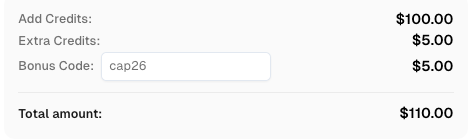
Use bonus code CAP26 when topping up your CapSolver account to get an extra 5% bonus on every recharge — with no limits.
Redeem it now in your CapSolver Dashboard
Step 3: Configure a Local MCP Client
A local client must launch uvx capsolver-mcp and pass CAPSOLVER_API_KEY to the subprocess.
Use this configuration shape in clients that accept an mcpServers object, including Claude Desktop and clients with compatible local-server configuration:
json
{
  "mcpServers": {
    "capsolver": {
      "command": "uvx",
      "args": ["capsolver-mcp"],
      "env": {
        "CAPSOLVER_API_KEY": "YOUR_CAPSOLVER_API_KEY"
      }
    }
  }
}
Replace the placeholder locally. Do not commit a real API key to Git, paste it into issue reports, or include it in screenshots.
If the desktop application cannot find uvx, use the absolute path returned by the following command:
bash
which uvxOn Windows PowerShell, use:
powershell
Get-Command uvxAfter saving the configuration, fully restart the MCP client. A window close may leave the application running in the background, so quit the process if the server does not appear after editing the configuration.
Step 4: Verify the MCP Handshake and Tools
A successful connection should expose five CapSolver MCP tools to the client.
| Tool | Purpose | Additional browser dependency |
|---|---|---|
solve_captcha |
Submit and retrieve a solution using explicit challenge parameters | No |
detect_captchas |
Inspect an authorized page for supported challenge types | Yes |
solve_on_page |
Detect, solve, and fill supported challenges in an authorized browser workflow | Yes |
get_balance |
Check the account balance and packages | No |
get_supported_captchas |
List supported challenge types and handlers | No |
Start with a non-browser check such as:
text
Use the CapSolver MCP server to list the supported CAPTCHA types.Then verify account authentication with:
text
Use the CapSolver MCP server to check my account balance.These checks confirm that the client can launch the stdio process, discover its tools, and pass the environment variable. A real solving request additionally needs authorized target parameters and sufficient account balance.
Step 5: Enable Browser-Based Tools When Needed
Browser-based detection and page interaction require the optional package extra plus Playwright Chromium.
For a dedicated environment, run:
bash
python -m pip install "capsolver-mcp[browser]==0.1.3"
playwright install chromium
If the MCP client launches uvx, include the browser extra in the package argument:
json
{
  "mcpServers": {
    "capsolver-browser": {
      "command": "uvx",
      "args": ["--from", "capsolver-mcp[browser]==0.1.3", "capsolver-mcp"],
      "env": {
        "CAPSOLVER_API_KEY": "YOUR_CAPSOLVER_API_KEY"
      }
    }
  }
}
Playwright still needs a compatible Chromium binary on the same machine. For production workflows, pin versions, test upgrades in staging, and keep browser installation separate from application secrets.
Common Setup Problems
Most CapSolver MCP connection failures come from the runtime path, Python version, missing credentials, or optional browser dependencies.
The client reports spawn uvx ENOENT
The desktop application cannot see uvx on its process PATH. Use the absolute uvx path in the command field, then restart the application completely.
The server starts but tools fail authentication
The CAPSOLVER_API_KEY value is missing, malformed, or not reaching the child process. Confirm the variable name exactly, replace the placeholder, and avoid adding extra quotation marks inside JSON values.
detect_captchas or solve_on_page is unavailable
The base package does not install Playwright. Install capsolver-mcp[browser], install Chromium, and restart the client so it launches the updated environment.
The Registry shows more than one CapSolver result
Registry search APIs can return multiple published versions of the same server. Select the record where isLatest is true, or query the exact version endpoint rather than treating the result count as a uniqueness check.
The client connects but a solve request fails
Separate connection problems from task problems. First verify tool discovery and get_balance; then check the task type, website URL, site key, optional fields, and account balance against the CapSolver documentation.
Operational and Responsible-Use Limits
CapSolver MCP is a local tool interface, not permission to automate a target. Use it only on websites and systems you own or are authorized to test or automate. Follow applicable terms, privacy requirements, rate limits, and data-retention rules.
The Official Registry confirms publisher-controlled metadata and package location; it does not replace your own security review. Inspect the CapSolver MCP source repository, pin versions where your change process requires it, protect API keys, and test updates before broad deployment.
For architecture decisions beyond a single client, see how enterprise AI-agent teams structure authorized challenge handling and review the definition of an API endpoint when designing service boundaries.
Conclusion
The Official MCP Registry now provides a canonical, searchable record for CapSolver MCP, while PyPI supplies the executable Python package. A reliable setup follows a short sequence: confirm the registry identity, run the CLI, add CAPSOLVER_API_KEY to the client environment, restart the client, and verify tool discovery before attempting an authorized task.
Use CapSolver to add documented CAPTCHA-solving tools to supported AI-agent and browser-automation workflows.
Build Reliable Automation Workflows with CapSolver
Create an account, store your API key securely, and start with a bounded test on a website or system you are authorized to automate. The CapSolver FAQ covers common product and account questions before you move the integration into production.
FAQ
Q: Is CapSolver MCP available in the Official MCP Registry?
Yes. The registry name is io.github.capsolver-ai/capsolver-mcp, and version 0.1.3 is currently active and marked as the latest release.
Q: Does installing from the Registry create a hosted remote connection?
No. The current registry entry describes a PyPI package launched locally with uvx over stdio; it does not advertise a CapSolver-hosted remote MCP endpoint.
Q: Do I need to install capsolver-mcp globally?
No. uvx capsolver-mcp runs the tool in an isolated environment, while an explicit pip install remains available for teams that manage their own virtual environments.
Q: Why does my client connect but not show the browser tools?
The browser tools require the capsolver-mcp[browser] extra and a Playwright Chromium installation. Restart the client after installing both components.
Q: Which environment variable does CapSolver MCP require?
CapSolver MCP requires CAPSOLVER_API_KEY. Pass it through the client environment and keep the real value out of source control and support screenshots.
Q: Can I use CapSolver MCP on any website?
No. Use CapSolver MCP only on websites and systems you own or are authorized to test or automate, and follow the applicable terms, privacy rules, and legal requirements.
Compliance Disclaimer: The information provided on this blog is for informational purposes only. CapSolver is committed to compliance with all applicable laws and regulations. The use of the CapSolver network for illegal, fraudulent, or abusive activities is strictly prohibited and will be investigated. Our captcha-solving solutions enhance user experience while ensuring 100% compliance in helping solve captcha difficulties during public data crawling. We encourage responsible use of our services. For more information, please visit our Terms of Service and Privacy Policy.
More
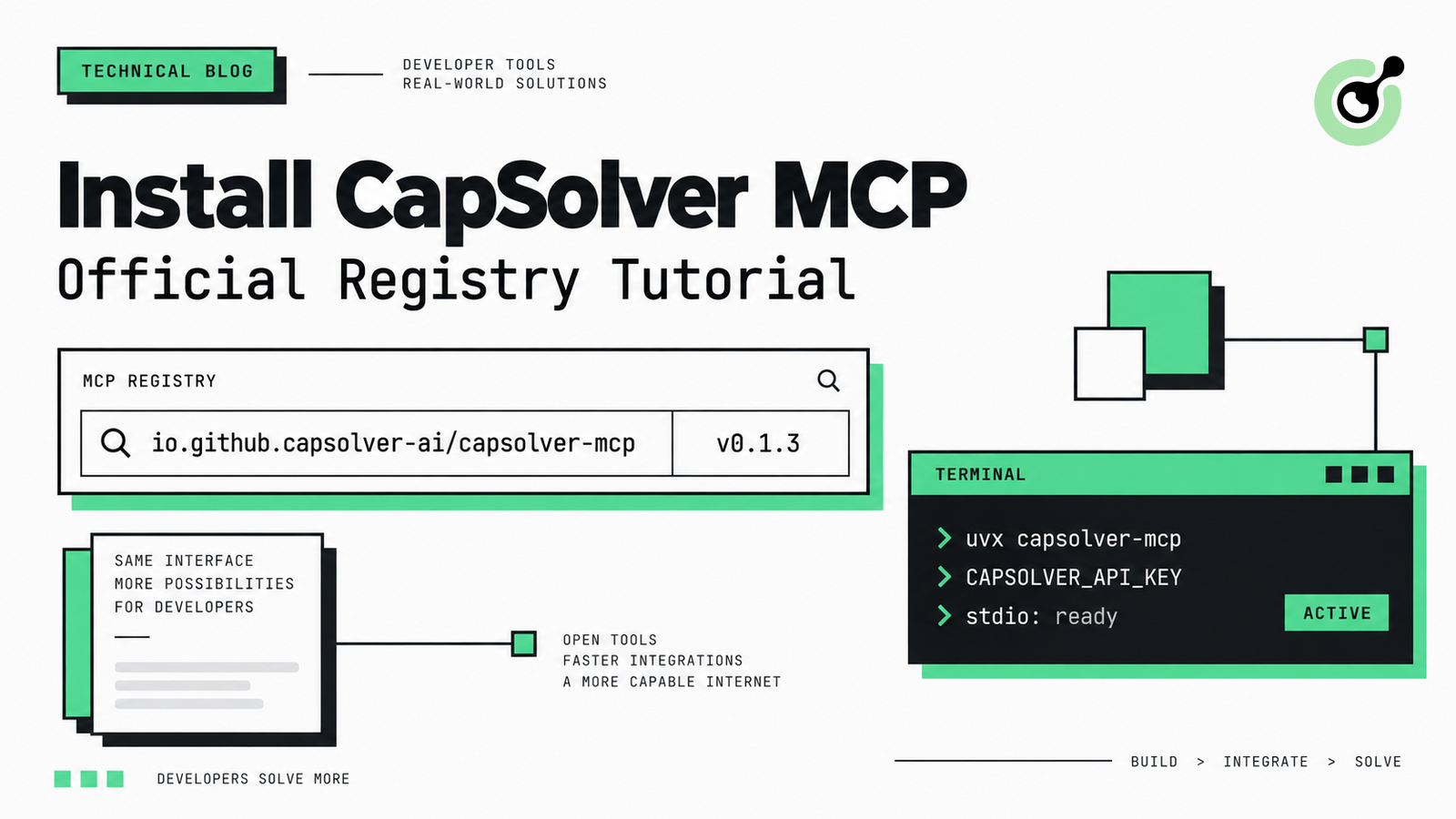
How to Install CapSolver MCP from the Official MCP Registry
Find CapSolver MCP in the Official MCP Registry, install version 0.1.3 with uvx or pip, configure a local client, and verify the stdio tools.
Khadija Santos
18-Sep-2026
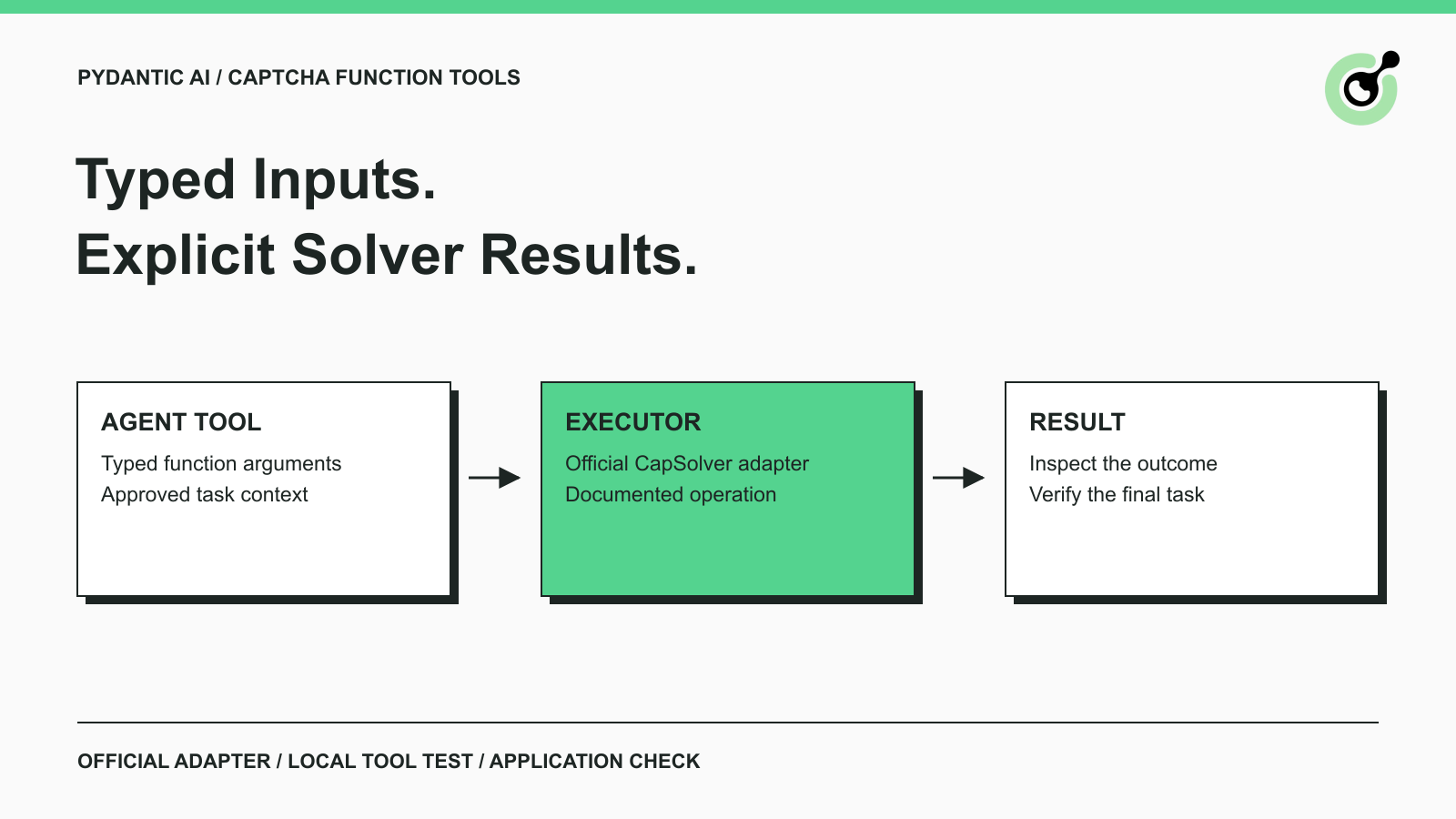
Pydantic AI CAPTCHA Tools: Typed Inputs and Solver Results
Add CAPTCHA tools to Pydantic AI using the official CapSolver adapter, test tool execution locally, and handle typed inputs and structured solver results.
Khadija Santos
18-Sep-2026
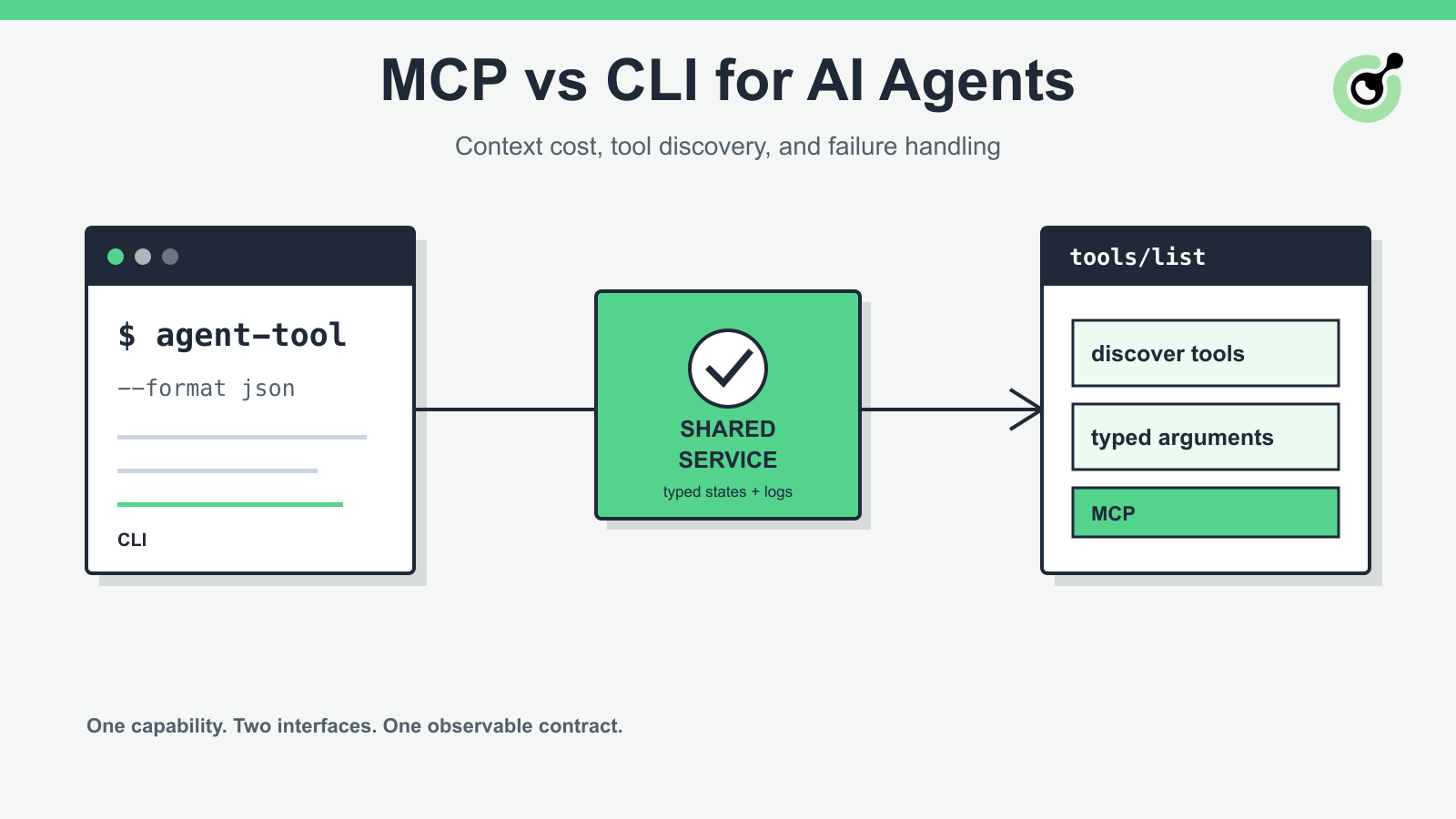
MCP vs CLI for AI Agents: Context Cost and Failure Handling
Compare MCP and CLI interfaces for AI agents across tool discovery, context cost, security, debugging, failure handling, and hybrid architecture.

Nikolai Smirnov
18-Sep-2026
How to Handle Multiple CAPTCHA Widgets in AI Browser Agents
Handle multiple CAPTCHA widgets on one page with explicit form ownership, solver parameters, result routing, and checks for the intended AI agent action.

Lucas Mitchell
15-Sep-2026

CapSolver MCP Server Is Now Available for AI Agents
Install CapSolver MCP Server from PyPI and give compatible AI agents five tools for authorized CAPTCHA handling through the Model Context Protocol.

Sora Fujimoto
11-Sep-2026

AI Agents vs Scripts: How to Choose for Web Automation
Choose between AI agents, scripts, and hybrid web automation by task uncertainty, testability, cost, and the controls needed for reliable execution.
Lucas Mitchell
11-Sep-2026