











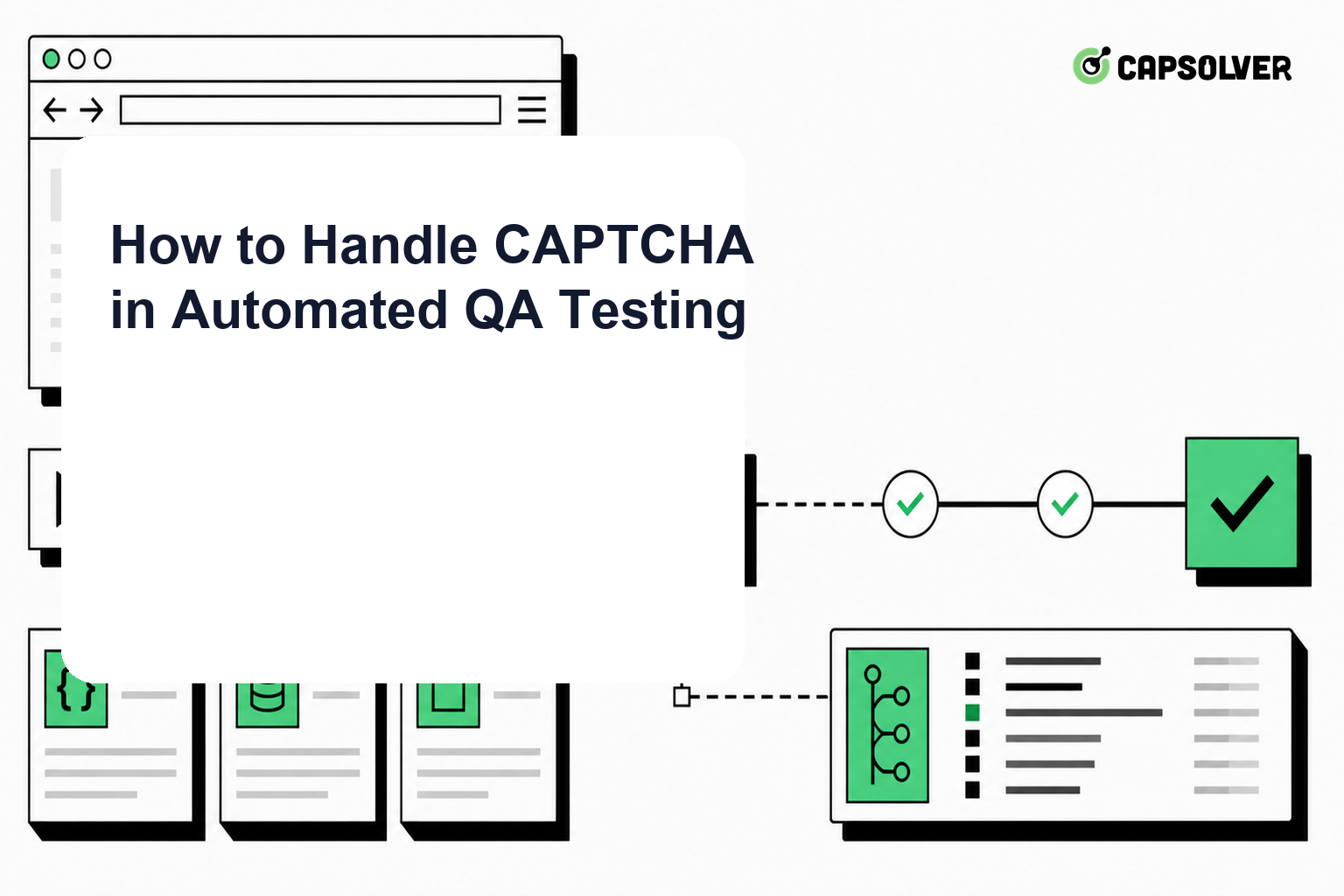
How to Handle CAPTCHA in Automated QA Testing

Ethan Collins
How to use CapSolver
10-Aug-2026
TL;DR
- QA testing CAPTCHA automation should separate widget rendering tests from full external solving tests.
- A staging test needs a known challenge, a fixed attempt budget, and an application-level assertion after verification.
- CapSolver's Core SDK can detect supported challenges and run browser-mode solving inside a controlled Playwright flow.
- CI failures should retain traces and stop after a bounded attempt instead of hiding product defects behind repeated solves.
Introduction
QA testing CAPTCHA automation is reliable when the test team controls both the purpose of the run and the condition that proves success. CapSolver can handle a supported verification checkpoint, but the test harness still owns the browser, fixtures, assertions, retries, and cleanup. A good suite uses local or vendor-provided test keys for most component tests, then reserves live solving for a small number of authorized staging checks. This reduces flakiness and cost while preserving coverage of the real integration boundary. The workflow below shows how to organize a Playwright-based test, define a one-attempt stop condition, and record evidence that distinguishes a CAPTCHA service issue from a form, session, or application-state failure.
Split CAPTCHA Tests Into Three Layers
QA testing CAPTCHA automation should use different test layers for different risks.
| Layer | Purpose | External solve needed |
|---|---|---|
| Component | Widget placement, callback wiring, error messages | No |
| Integration | Backend verification and form-state transitions | Usually no; use approved test keys |
| Staging journey | Browser detection, solve, fill-back, final application state | Yes, in a controlled environment |
Google publishes reCAPTCHA test guidance, and Cloudflare provides Turnstile testing sitekeys. Use those first when the goal is deterministic application logic. Live solving belongs in a smaller staging band.
Define the Test Contract
The contract needs an approved host, expected challenge type, single attempt, and final assertion:
json
{
  "host": "staging.example.org",
  "challenge": "recaptcha-v2",
  "max_attempts": 1,
  "assertion": "receipt-page-visible",
  "on_repeat": "fail-and-review"
}
The contract is not a CapSolver request. It is a guardrail around the test. Technical capability never grants permission to test private, restricted, sensitive, or unauthorized systems.
Add CapSolver to a Playwright Test
The CapSolver Core SDK documents create_capsolver, detect, get_captcha_info, solve, and solve_on_page. Install the SDK with Playwright support and keep the API key in CI secrets:
bash
pip install "capsolver-core[playwright] @ git+https://github.com/capsolver-ai/capsolver-core.git"
playwright install chromium
The following example is an illustrative staging pattern using the documented browser method:
python
import os
from capsolver_core import create_capsolver

async def recover_checkpoint(page):
    async with create_capsolver(api_key=os.environ["CAPSOLVER_API_KEY"]) as cap:
        results = await cap.solve_on_page(page)
        if any(item.error for item in results):
            raise AssertionError("CAPTCHA recovery returned an error")
        return results
Call the helper only after the test confirms that the current host and purpose match the contract. Then assert the real product state with Playwright auto-retrying assertions.
Redeem Your CapSolver Bonus Code
Boost your automation budget instantly!
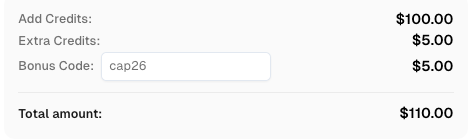
Use bonus code CAP26 when topping up your CapSolver account to get an extra 5% bonus on every recharge — with no limits.
Redeem it now in your CapSolver Dashboard
Make CI Failures Diagnosable
Capture a Playwright trace, the challenge type, the application route, and the terminal assertion. Do not log API keys, cookies, or solved tokens. The Playwright Trace Viewer can show whether the page navigated, the widget changed state, or the application rejected the next action.
Classify failures as server startup, authentication, unsupported challenge, solve error, fill-back error, or application assertion failure. This prevents a QA team from blaming CAPTCHA handling for unrelated session and form defects.
Choose a Safe Stop Condition
One staging recovery attempt is normally enough. Stop if the same challenge appears again, the hostname changes, the browser loses its expected session, or the final assertion fails. A repeated checkpoint is evidence to inspect, not an invitation to loop.
The CapSolver AI-agent overview explains the same separation of responsibilities for production browser agents, while the CAPTCHA solving overview helps teams distinguish service concepts from application test logic.
Conclusion
QA testing CAPTCHA automation should optimize for trustworthy evidence, not maximum solve volume. Use test keys for deterministic layers, reserve a small staging band for real browser checks, and assert the application outcome after one bounded recovery attempt. CapSolver can supply that staging recovery step while your test suite retains control of authorization and pass/fail decisions.
FAQ
Q: Should every CAPTCHA test call a solving service?
No. Component and most integration tests should use approved test fixtures; live solving belongs in a limited staging suite.
Q: What proves a CAPTCHA QA test passed?
The application must reach the expected post-verification state, such as a receipt or account page becoming visible.
Q: Can QA tests use unlimited retries?
No. Use a bounded attempt budget and treat repetition as a failure requiring investigation.
Q: What data should a CI log retain?
Retain traces, challenge class, route, request identifiers when available, and the terminal assertion, but never credentials or tokens.
Compliance Disclaimer: The information provided on this blog is for informational purposes only. CapSolver is committed to compliance with all applicable laws and regulations. The use of the CapSolver network for illegal, fraudulent, or abusive activities is strictly prohibited and will be investigated. Our captcha-solving solutions enhance user experience while ensuring 100% compliance in helping solve captcha difficulties during public data crawling. We encourage responsible use of our services. For more information, please visit our Terms of Service and Privacy Policy.
More
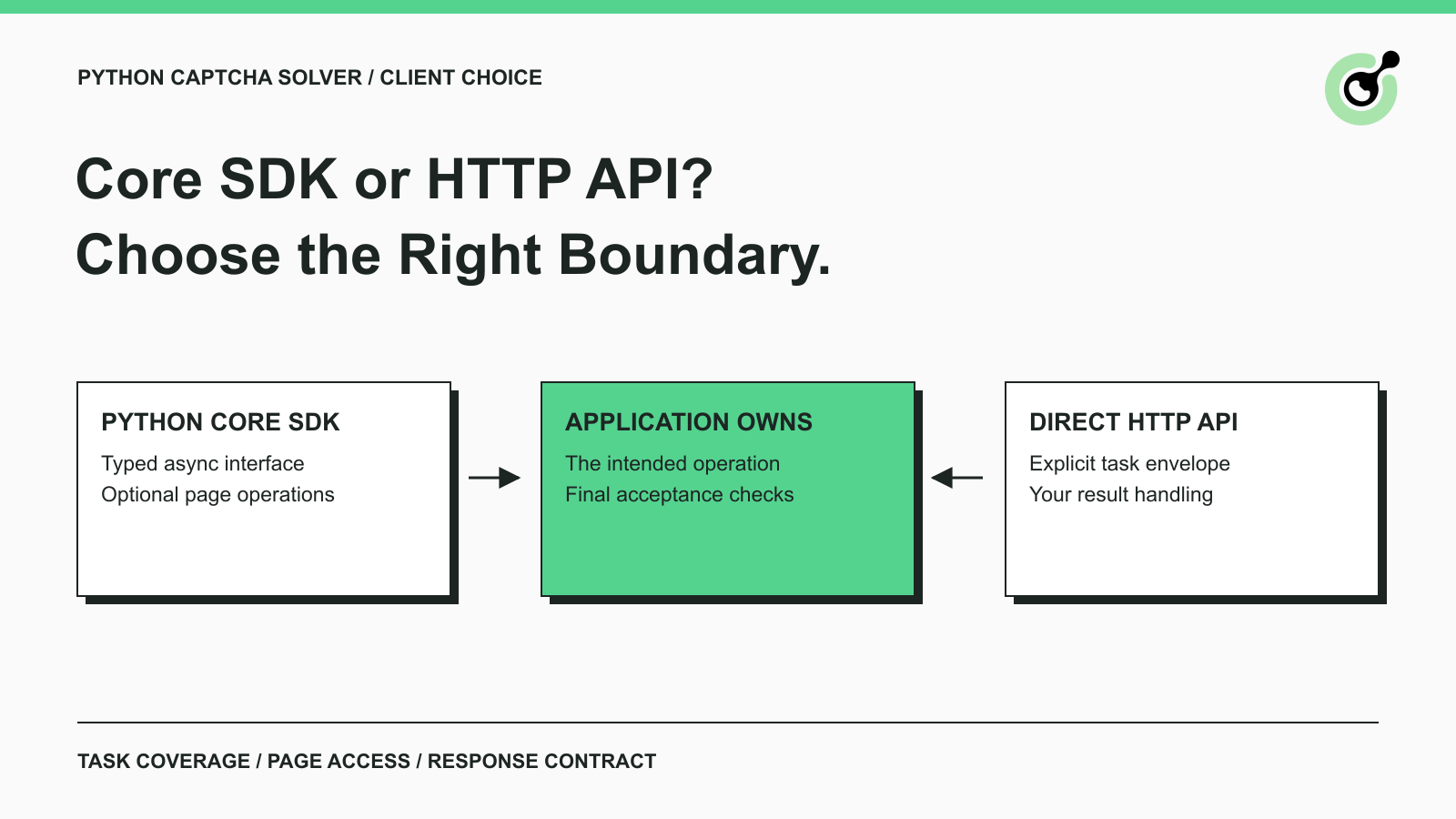
CapSolver Python Core SDK vs HTTP API: Which Should You Use?
Choose the CapSolver Python Core SDK or direct HTTP API by task support, page access, response handling, and the responsibilities your application owns.
Ethan Collins
16-Sep-2026
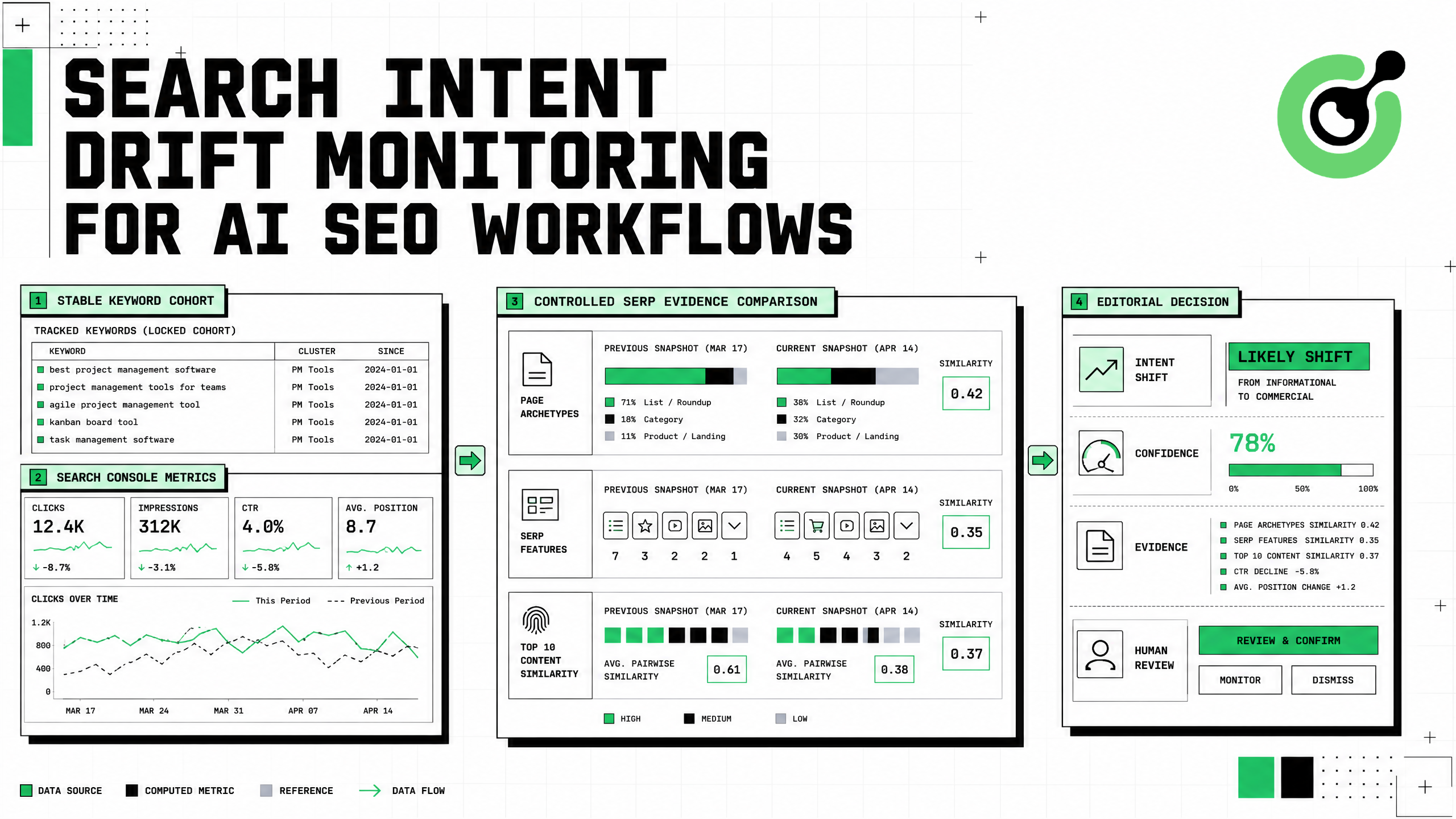
Search Intent Drift Monitoring for AI SEO Workflows
Build search intent drift monitoring with Search Console data, controlled SERP observations, intent labels, confidence gates, evidence, and safe automation.
Ethan Collins
31-Aug-2026
How to Add Gumloop CAPTCHA Solving to Web Workflows
Build Gumloop CAPTCHA solving with a verified HTTP contract, controlled recovery branch, retry budget, browser-state checks, and human fallback.

Nikolai Smirnov
21-Aug-2026
How to Add a CAPTCHA Solver to Form Automation Workflows
A form automation captcha solver is an error-recovery component for a permitted form workflow, not a shortcut around authorization. CapSolver can provide a reCAPTCHA solution through the documented task API while your application preserves inputs, browser context, consent, and the final submission rule. The safest sequence is detect, snapshot, create one task, poll with a deadline, apply the result in the same session, and verify the form's own confirmation state. This articl
Ethan Collins
13-Aug-2026
How to Handle CAPTCHA in RPA Automation Workflows Safely
RPA CAPTCHA automation is reliable only when CAPTCHA becomes an explicit workflow state. CapSolver can provide the CAPTCHA handling layer through its browser extension or documented API, while the RPA platform controls process scope, credentials, timeouts, and business validation. This avoids the common failure where a robot keeps clicking after verification appears, loses form state, or submits twice. A production design pauses at detection, waits for one bounded result, ver
Ethan Collins
12-Aug-2026
How to Handle CAPTCHA in Automated QA Testing
Handle CAPTCHA in automated QA testing with controlled test fixtures, CapSolver browser integration, bounded retries, and reliable assertions.
Ethan Collins
10-Aug-2026