











Captcha Solving for InsurTech Claims Processing: Faster, Accurate

Ethan Collins
How to use CapSolver
07-Jul-2026
TL;DR
- Automating captcha solving can speed insurtech claims intake, reduce manual steps, and improve turnaround when used responsibly.
- Combine real-time captcha solving APIs, adaptive workflows, and human-in-the-loop fallback for resilient claims processing.
- Focus on risk control, compliance, and transparency to maintain insurer trust and customer privacy.
- Monitor latency, success rate, and false positives to measure ROI and claim-cycle impact.
- See implementation patterns, vendor comparisons, and a checklist to start safely.
Introduction
Automated captcha solving, when implemented with proper risk controls, improves throughput and reduces manual friction in claims intake. This article targets InsurTech product managers, claims engineers, fraud teams, and automation architects. It explains practical architectures for captcha solving for insurtech claims processing, outlines legal and operational constraints, and provides a step-by-step checklist to deploy solutions that maintain fraud defenses and customer trust. You will get vendor decision criteria, sample metrics, and integration patterns that align with responsible automation practices.
Why captchas matter in claims processing
Captchas are a core traffic validation control at the claims front door. They filter automated spam, protect against bot-driven fraudulent claims spikes, and preserve downstream underwriting quality.
The role of captcha solving for insurtech claims processing
Automated intake systems must sometimes interact with third-party forms, carrier portals, or public webpages protected by captchas. Captcha solving for insurtech claims processing enables legitimate automated workflows to complete these interactions without manual steps, speeding FNOL (first notice of loss) flows and document retrieval.
Balancing throughput and validation
Removing captchas entirely weakens defenses. Use captcha solving for insurtech claims processing selectively: apply it where identity verification, anti-fraud scoring, or manual review already provide compensating controls. Combine with device fingerprinting, IP reputation, and behavioral signals.
Practical architectures for captcha solving in claims workflows
Design patterns matter. Choose an architecture that matches latency, volume, and compliance needs.
Real-time API + human fallback
Pattern: primary route uses a captcha solving API; if confidence is low or the captcha type is unsupported, route to human-in-the-loop resolution. This hybrid model for captcha solving for insurtech claims processing keeps latency low while ensuring coverage.
- Advantages: predictable latency, broad captcha coverage.
- When to use: high-volume FNOL systems where user experience matters.
Browser automation with session preservation
Pattern: controlled headless browsers maintain authenticated sessions and solve inline captchas using an API adapter. This is useful when claims bots must have the same session as an authenticated agent.
- Advantages: better session fidelity, fewer re-authentications.
- Considerations: session security and token lifecycle must be managed tightly for captcha solving for insurtech claims processing.
Queue-based asynchronous solving
Pattern: enqueue captcha challenges and process them asynchronously for non-interactive tasks like bulk document retrieval across carrier portals.
- Advantages: cost efficiency, tolerant of higher latency.
- Use case: batch claim reconciliation, archival data harvest for underwriting.
Integration points and telemetry
Integrate solving endpoints close to the orchestration layer. Emit metrics: solve latency, solve success rate, human fallback frequency, and downstream claim acceptance. Those KPIs show the operational impact of captcha solving for insurtech claims processing and feed fraud models.
Risk, compliance, and ethical considerations
Responsible deployment is essential. Captcha solving touches authentication, privacy, and contractual terms.
Legal and contract constraints
Review terms of service for external carrier portals and data sources before using automated captcha solving for insurtech claims processing. Where APIs or data-sharing agreements exist, prefer sanctioned integration methods. Work with legal to codify acceptable use and data retention policies.
OWASP Automated Threats Project and NIST guidance provide useful frameworks for threat assessment and control mapping.
Privacy and data handling
Minimize PII exposure in captcha images and transcripts. Log only operational metadata and redact sensitive content. Encrypt traffic between orchestration, captcha providers, and storage to reduce risk when implementing captcha solving for insurtech claims processing.
Fraud, audit trails, and transparency
Record audit trails that show when captcha solving was used and why. Share a summarized provenance with downstream underwriting and fraud teams. Transparency helps maintain trust and allows retrospective reviews of claim decisions involving automated solves.
Implementation checklist and performance metrics
Deploy with measurable goals and a controlled rollout.
Pre-deployment checklist
- Define acceptable use policy and legal sign-off for captcha solving for insurtech claims processing.
- Map touchpoints where captchas appear and the expected traffic volumes.
- Select an API provider and confirm captcha type coverage.
- Design human fallback and monitoring dashboards.
- Establish retention, encryption, and access controls for logs.
Use vendor and technical documentation; see CapSolver products for solution options and consult the captcha solving FAQ for common integration questions.
Key performance indicators
- Solve success rate (%) — aim for >95% in production.
- Median solve latency — target depends on UX (sub-second for interactive, minutes for batch).
- Human fallback rate — track as a signal of coverage gaps.
- Downstream claim acceptance / fraud detection delta — measure whether automation degrades or improves model performance.
For broader automation context and how captcha solving fits into claims pipelines, reference our posts on automation and AI integration. For workflows that involve data harvesting and form interactions, see our web scraping guidance.
Comparison Summary
| Approach | Latency | Coverage | Cost | Best use case |
|---|---|---|---|---|
| Real-time API + human fallback | Low | High | Medium-High | Interactive FNOL and carrier portal access |
| Browser automation with session preservation | Medium | Medium-High | Medium | Authenticated session tasks and agent workflows |
| Queue-based asynchronous solving | High | Variable | Low | Batch retrieval, reconciliation jobs |
| Manual operator-only | High | High | High | Occasional exceptions, legal constraints |
Bonus Code: A top captcha solutions for captcha solving for insurtech claims processing
Enter your bonus code top captcha solutions; captcha solving for insurtech claims processing to get an extra 5% added to your recharge, after a successful recharge.
Conclusion
Captcha solving for insurtech claims processing can cut manual work and accelerate claims life cycles when deployed with strong risk controls, legal review, and monitoring. Start with a hybrid architecture, instrument KPIs, and ensure traceability for audits. For product options and technical integration guides, visit CapSolver products and our learning resources on the blog. When you’re ready, review the captcha solving FAQ and pilot a controlled rollout. Learn more at https://www.capsolver.com/?utm_source=offcial&utm_medium=blog&utm_campaign=captcha-solving-for-insurtech-claims-processing
FAQ
Q: Is captcha solving legal for claims automation?
A: It can be legal if you comply with third-party terms, contracts, and data protection laws. Always perform legal and vendor reviews before using captcha solving for insurtech claims processing.
Q: How do I measure the business impact?
A: Track solve success rate, latency, human fallback, and downstream claim acceptance. Correlate these with cycle time and cost per claim to quantify the value of captcha solving for insurtech claims processing.
Q: When should I use human-in-the-loop?
A: Use human fallback when captcha type coverage is incomplete, confidence is low, or the claim has high financial exposure. Human review preserves business continuity while you extend automated coverage for captcha solving for insurtech claims processing.
Q: What are common risks to monitor?
A: Monitor failed solves, spikes in human fallback, unusual IP patterns, and data leakage in logs. Those signals indicate operational or contractual risks when using captcha solving for insurtech claims processing.
Q: Where can I find implementation examples?
A: See product docs and blog posts on integration patterns. Start with our automation and web scraping content for practical examples and code snippets.
For additional best practices and security references, consult authoritative resources like Insurance Information Institute and security standards available at OWASP.
Compliance Disclaimer: The information provided on this blog is for informational purposes only. CapSolver is committed to compliance with all applicable laws and regulations. The use of the CapSolver network for illegal, fraudulent, or abusive activities is strictly prohibited and will be investigated. Our captcha-solving solutions enhance user experience while ensuring 100% compliance in helping solve captcha difficulties during public data crawling. We encourage responsible use of our services. For more information, please visit our Terms of Service and Privacy Policy.
More
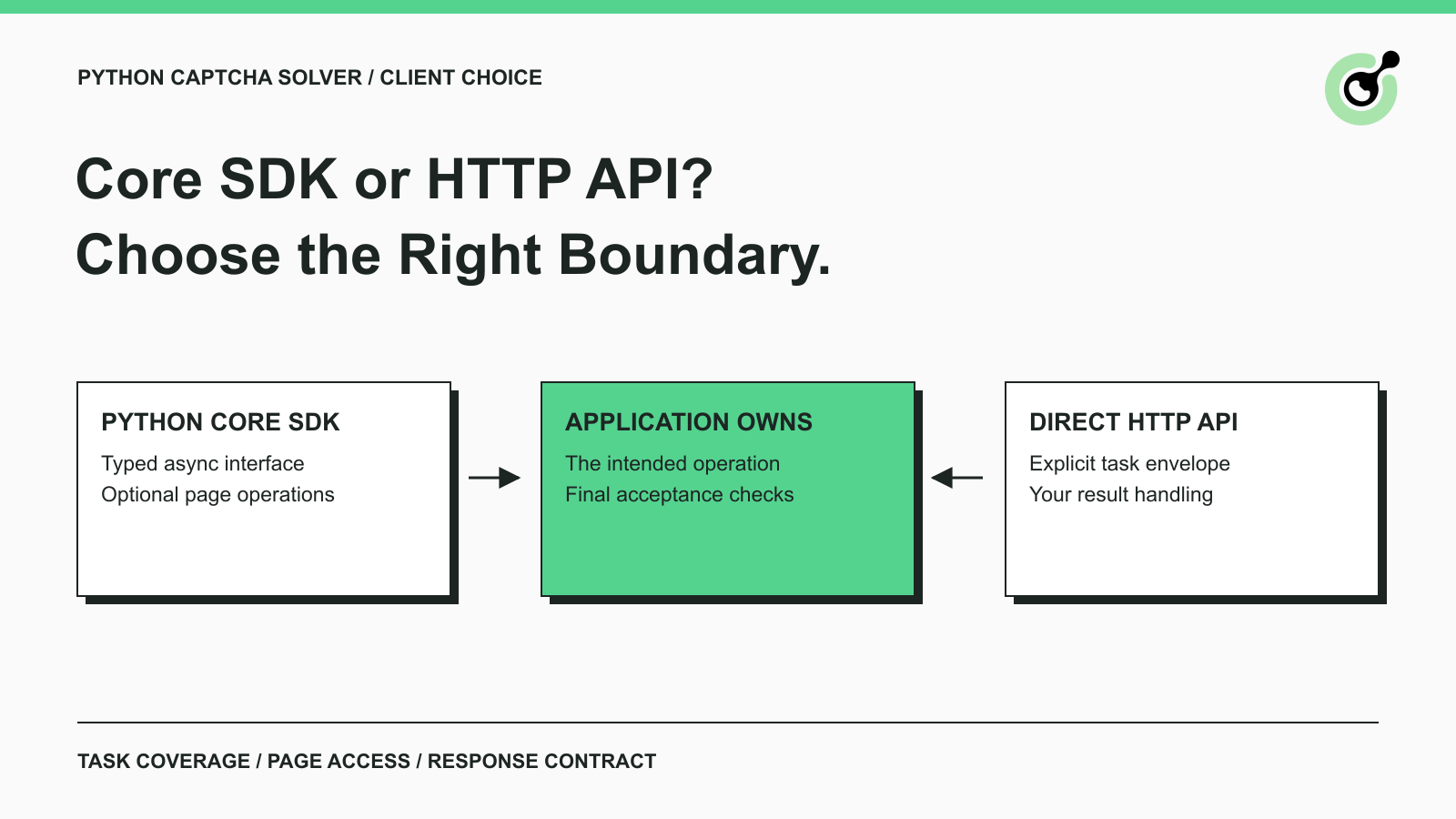
CapSolver Python Core SDK vs HTTP API: Which Should You Use?
Choose the CapSolver Python Core SDK or direct HTTP API by task support, page access, response handling, and the responsibilities your application owns.
Ethan Collins
16-Sep-2026
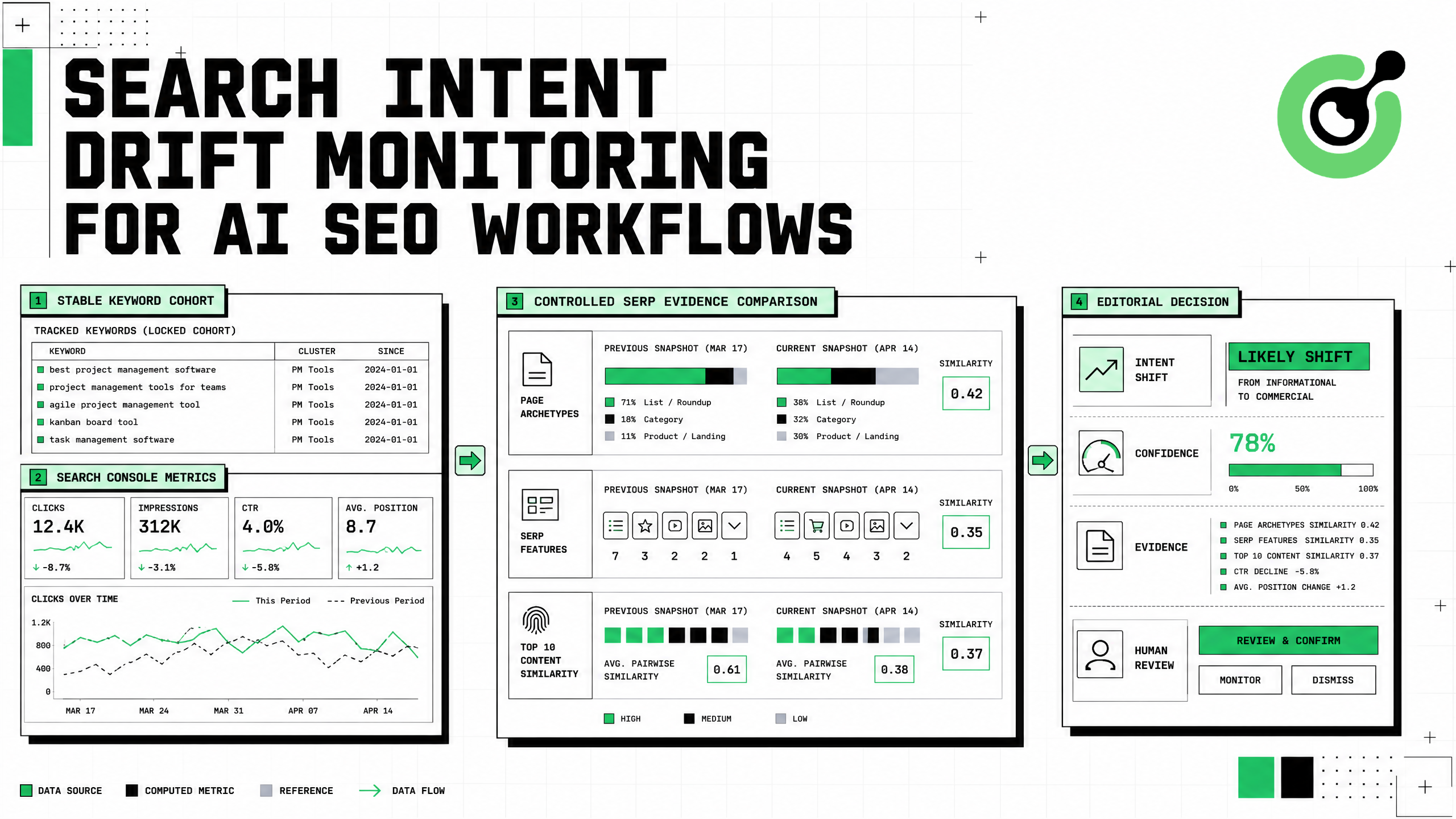
Search Intent Drift Monitoring for AI SEO Workflows
Build search intent drift monitoring with Search Console data, controlled SERP observations, intent labels, confidence gates, evidence, and safe automation.
Ethan Collins
31-Aug-2026

How to Add Gumloop CAPTCHA Solving to Web Workflows
Build Gumloop CAPTCHA solving with a verified HTTP contract, controlled recovery branch, retry budget, browser-state checks, and human fallback.

Nikolai Smirnov
21-Aug-2026
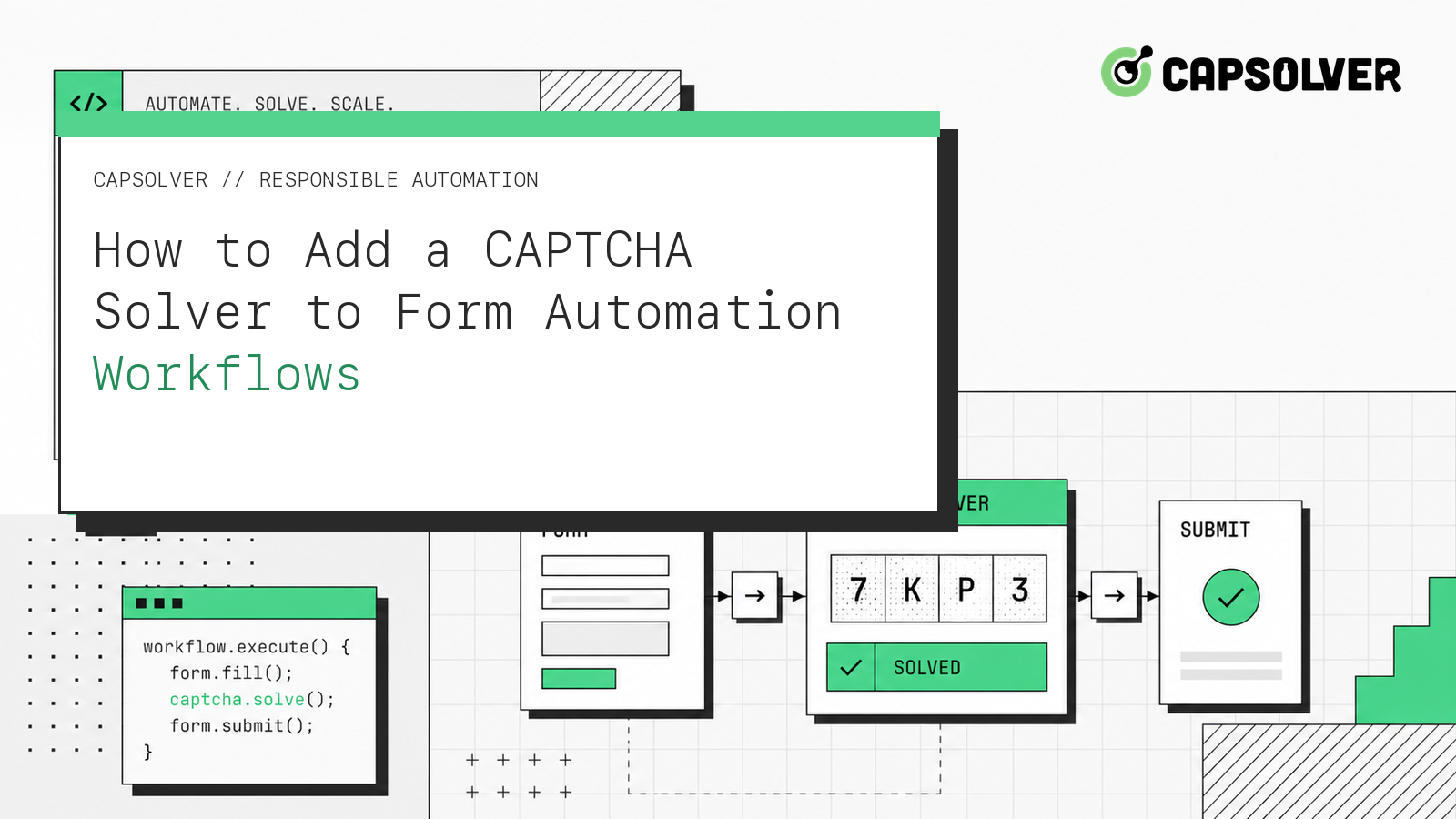
How to Add a CAPTCHA Solver to Form Automation Workflows
A form automation captcha solver is an error-recovery component for a permitted form workflow, not a shortcut around authorization. CapSolver can provide a reCAPTCHA solution through the documented task API while your application preserves inputs, browser context, consent, and the final submission rule. The safest sequence is detect, snapshot, create one task, poll with a deadline, apply the result in the same session, and verify the form's own confirmation state. This articl
Ethan Collins
13-Aug-2026
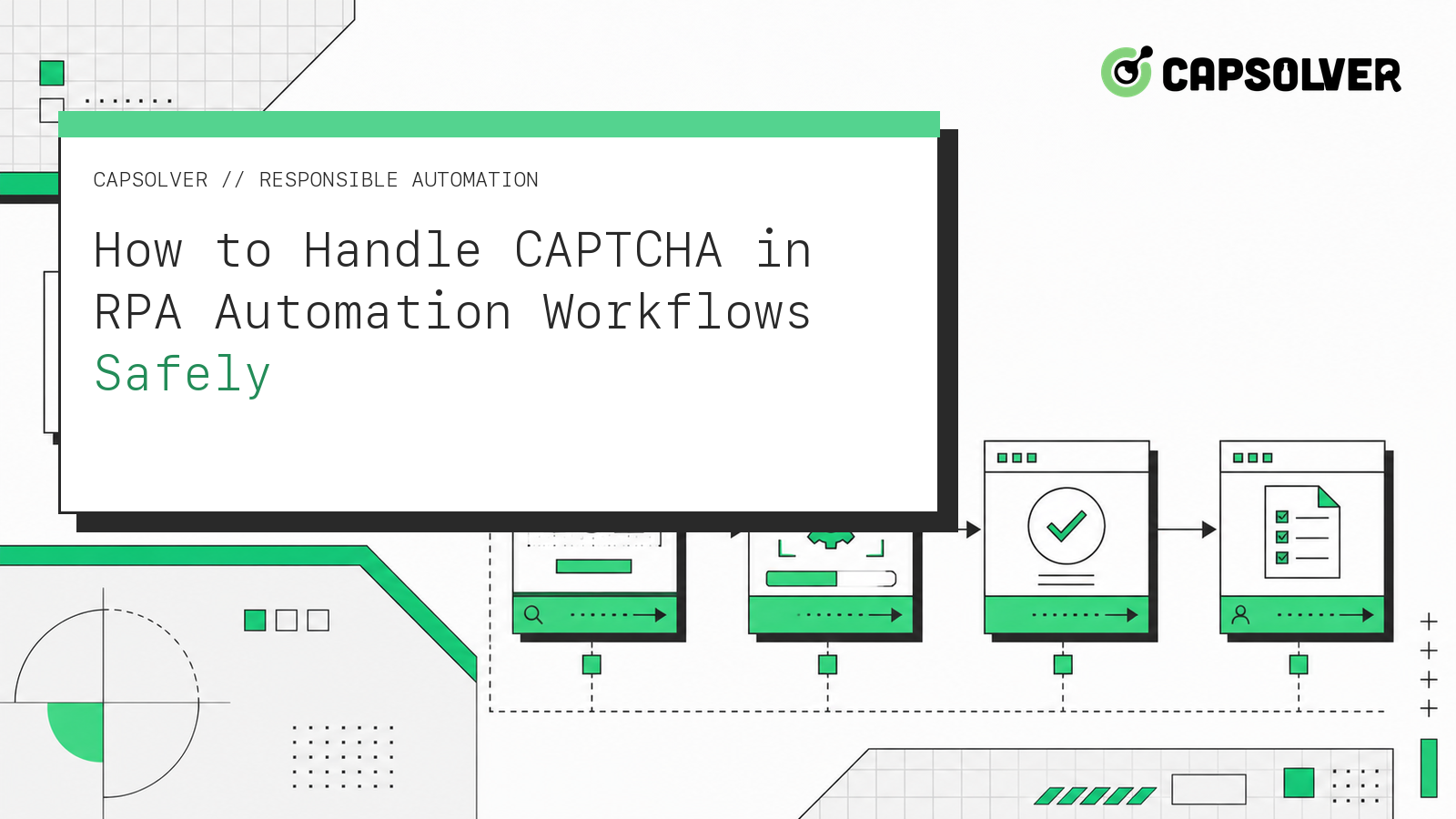
How to Handle CAPTCHA in RPA Automation Workflows Safely
RPA CAPTCHA automation is reliable only when CAPTCHA becomes an explicit workflow state. CapSolver can provide the CAPTCHA handling layer through its browser extension or documented API, while the RPA platform controls process scope, credentials, timeouts, and business validation. This avoids the common failure where a robot keeps clicking after verification appears, loses form state, or submits twice. A production design pauses at detection, waits for one bounded result, ver
Ethan Collins
12-Aug-2026
How to Handle CAPTCHA in Automated QA Testing
Handle CAPTCHA in automated QA testing with controlled test fixtures, CapSolver browser integration, bounded retries, and reliable assertions.
Ethan Collins
10-Aug-2026