











How to Solve CAPTCHA in Ecommerce Inventory Tracking Systems

Ethan Collins
How to use CapSolver
07-Jul-2026
TL;DR
- Captchas protect traffic validation but complicate automated ecommerce inventory tracking workflows.
- Combine lawful captcha-solving services, smart browser handling, and human-in-the-loop flows to maintain accuracy and compliance.
- Monitor traffic patterns, rotate credentials, and respect site terms to reduce risk and maintain uptime.
- Use telemetry, retries, and adaptive delays to reduce triggers and improve success rates.
- Prioritize responsible automation and use proven providers for scale and support.
Introduction
Conclusion first: the practical path to reliable inventory data is a mix of technical controls, compliant captcha-solving, and proactive monitoring. This guide explains how to solve captcha in ecommerce inventory tracking for developers, product managers, and ops teams who need timely SKU-level data for pricing, replenishment, and catalog accuracy. Expect actionable patterns, implementation tips, and risk-control advice that keep systems lawful and maintainable. The core value: reduce downtime and manual work while respecting site controls and protecting your IP and business continuity.
Common captcha types and what they mean for inventory tracking
Understanding captcha types helps you choose the right approach for how to solve captcha in ecommerce inventory tracking.
Text-based and image-based captchas
Text captchas and classical image recognition require OCR or image models. These triggers typically indicate moderate traffic validation. For inventory scrapers, implement slower request pacing and token reuse where allowed to minimize frequency.
Modern interactive captchas (reCAPTCHA)
Interactive systems use behavioral signals and risk analysis. They assess browser fingerprints, mouse movements, and cookie histories. When these appear in inventory flows, solve them with session-based strategies and verified tokens rather than stateless solutions.
Invisible and token-based captcha systems
Some sites issue short-lived tokens after passive checks. These are ideal for legitimate automation when you can maintain a clean session. Preserve session state, refresh tokens proactively, and avoid disposable sessions that frequently re-trigger checks.
Rate-limiting and challenge cascades
Captchas often appear alongside rate limits. If your system repeatedly triggers challenges, reduce parallelism, introduce jitter, and partition requests across legitimate accounts or endpoints to reduce the need to solve captcha in ecommerce inventory tracking.
Practical approaches to automation
This section outlines implementation patterns for how to solve captcha in ecommerce inventory tracking with emphasis on compliance and reliability.
Human-in-the-loop and hybrid models
For high-value SKUs or intermittent failures, route challenges to a human verification queue. This reduces false positives and preserves quality. Use automated fallbacks that pause scraping when a challenge appears, then resume when human input clears the session.
Third-party captcha-solving services
Well-maintained solving services provide APIs to exchange challenge payloads for tokens. Integrate them for bulk operations but handle quotas, latency, and failure modes. For service details and feature comparisons see CapSolver products and the FAQ on captcha solving. Remember to document lawful use and adhere to site terms when using third-party solvers. Also consult vendor docs for proper integration: reCAPTCHA developer guide.
Headless browsers with realistic behavior
Use modern headless browsers that simulate real browsers and maintain cookies, local storage, and MIME headers. Add realistic interaction patterns like timed scrolls and pointer events to reduce behavioral triggers. Combine with smart proxy selection and session persistence for stable performance.
Token management and reuse policies
Store solved tokens securely and reuse within permitted expiration windows. Implement token caches and validation checks to avoid redundant solves. This reduces load and cost, and improves throughput when solving how to solve captcha in ecommerce inventory tracking at scale.
Integration patterns and operational best practices
Design flows that balance speed and risk control for how to solve captcha in ecommerce inventory tracking.
Request orchestration and pacing
Partition jobs by account or region to spread risk. Introduce randomized delays and backoff strategies when you detect a spike in challenges. Use monitoring to adjust throughput dynamically based on challenge rates.
Proxy management and IP hygiene
Use high-quality proxies and rotate them responsibly. Match IP geolocation and ISP signals to the target site expectations. Avoid mass IP sharing that can generate broader traffic validation and increase the frequency you need to solve captcha in ecommerce inventory tracking.
Telemetry, alerts, and quality metrics
Track challenge rates, solve latencies, and success rates. Raise alerts when challenge volume rises or solve success falls below a threshold. Maintain dashboards that correlate inventory freshness with challenge events for rapid triage.
Testing and continuous improvement
Run controlled experiments to measure the impact of pacing, browser settings, and solver providers. Keep a test harness that simulates production load to safely tune the parameters for how to solve captcha in ecommerce inventory tracking.
Legal, ethical, and risk-control considerations
Responsible automation reduces legal exposure and preserves long-term access.
Respect site terms and robot policies
Always consult a site’s terms of service and robot exclusion rules. If needed, request explicit permission or use official APIs. When scraping inventory, prefer API-based access if available and appropriate.
Data minimization and retention
Collect only the fields required for inventory purposes. Avoid storing challenge payloads or solved tokens longer than necessary. This lowers risk and simplifies compliance.
Incident response and escalation
Prepare playbooks for blocked accounts, IP blacklisting, and legal notices. Maintain contact channels for site operators when legitimate business needs require more stable access. For broader guidance on automation best practices, see CapSolver automation blog and web scraping resources.
Trust and transparency
Be transparent in partner relationships about automation usage. If operating at scale, consider formal agreements to reduce challenge frequency and diversify data access channels. For AI-based approaches and ethical considerations, review CapSolver AI insights and general best practices on our blog. Additional industry guidance is available from resources like Cloudflare bot management and OWASP automated threats.
Comparison Summary
| Approach | Best for | Latency | Compliance effort | Cost |
|---|---|---|---|---|
| Human-in-the-loop | Low-volume, high-accuracy | High | Low | Medium |
| Third-party solver API | Mid-volume automated tasks | Medium | Medium | Medium-High |
| Headless browser + own models | Custom flows, full control | Medium-High | High | High |
| Token reuse + session management | High-throughput, permitted sessions | Low | Medium | Low-Medium |
Bonus Code: A top captcha solutions for captcha solving for insurtech claims processing
Enter your bonus code top captcha solutions; captcha solving for insurtech claims processing to get an extra 5% added to your recharge, after a successful recharge.
Conclusion
Solving captchas reliably for inventory systems requires layered technical controls, thoughtful operational patterns, and strict adherence to legal and ethical boundaries. Use session preservation, adaptive pacing, and the right mix of solvers and human review to keep SKU data fresh and accurate. Monitor metrics and prepare incident playbooks to reduce downtime. For product features, integrations, and platform options, see CapSolver products and detailed captcha guidance at CapSolver CAPTCHA FAQ. Start building with responsible automation practices and visit https://www.capsolver.com/?utm_source=offcial&utm_medium=blog&utm_campaign=how-to-solve-captcha-in-ecommerce-inventory-tracking to learn more.
FAQ
Q: Is it legal to automate inventory checks if a site uses captchas?
A: Legal risk depends on site terms and jurisdiction. Prefer official APIs or written permission. Always document compliance steps and limit requests to necessary data.
Q: Which method is fastest for how to solve captcha in ecommerce inventory tracking at scale?
A: Token reuse with session persistence typically offers the best latency when permitted. Combine with adaptive pacing and high-quality proxies for scale.
Q: What monitoring should I implement around captcha solving?
A: Track challenge rate, solve latency, solve success, and blocked IPs. Correlate with inventory freshness and alert on anomalies.
Q: Can AI models solve every captcha type?
A: No. Modern interactive systems use behavioral signals that models alone cannot replicate reliably. Combine browser realism and session state with models where applicable.
Q: How do I choose a solver provider?
A: Compare latency, success rate, SLA, documentation, and compliance features. Test providers under representative loads and review their integration guides and support channels.
Compliance Disclaimer: The information provided on this blog is for informational purposes only. CapSolver is committed to compliance with all applicable laws and regulations. The use of the CapSolver network for illegal, fraudulent, or abusive activities is strictly prohibited and will be investigated. Our captcha-solving solutions enhance user experience while ensuring 100% compliance in helping solve captcha difficulties during public data crawling. We encourage responsible use of our services. For more information, please visit our Terms of Service and Privacy Policy.
More
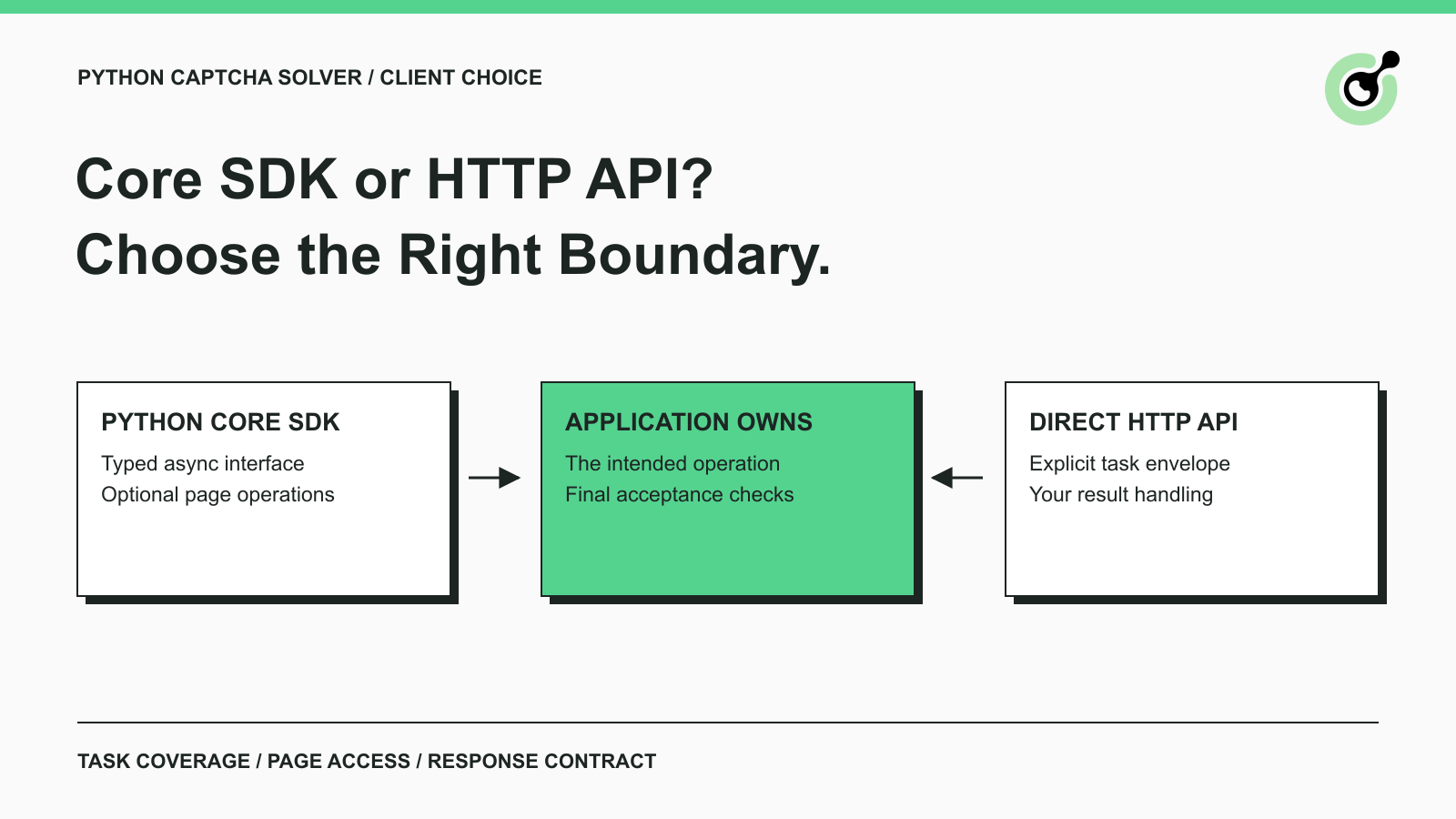
CapSolver Python Core SDK vs HTTP API: Which Should You Use?
Choose the CapSolver Python Core SDK or direct HTTP API by task support, page access, response handling, and the responsibilities your application owns.
Ethan Collins
16-Sep-2026
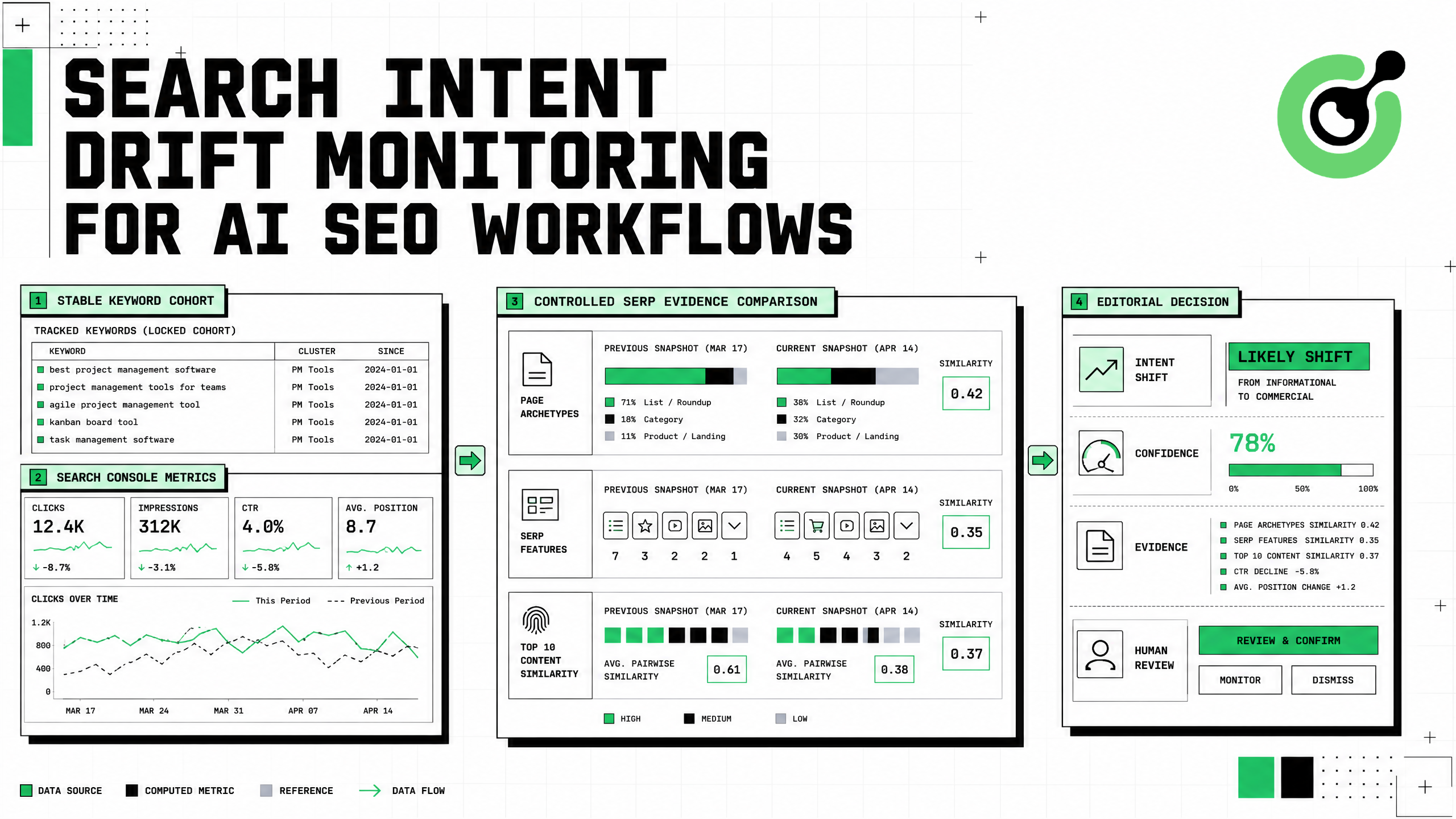
Search Intent Drift Monitoring for AI SEO Workflows
Build search intent drift monitoring with Search Console data, controlled SERP observations, intent labels, confidence gates, evidence, and safe automation.
Ethan Collins
31-Aug-2026

How to Add Gumloop CAPTCHA Solving to Web Workflows
Build Gumloop CAPTCHA solving with a verified HTTP contract, controlled recovery branch, retry budget, browser-state checks, and human fallback.

Nikolai Smirnov
21-Aug-2026
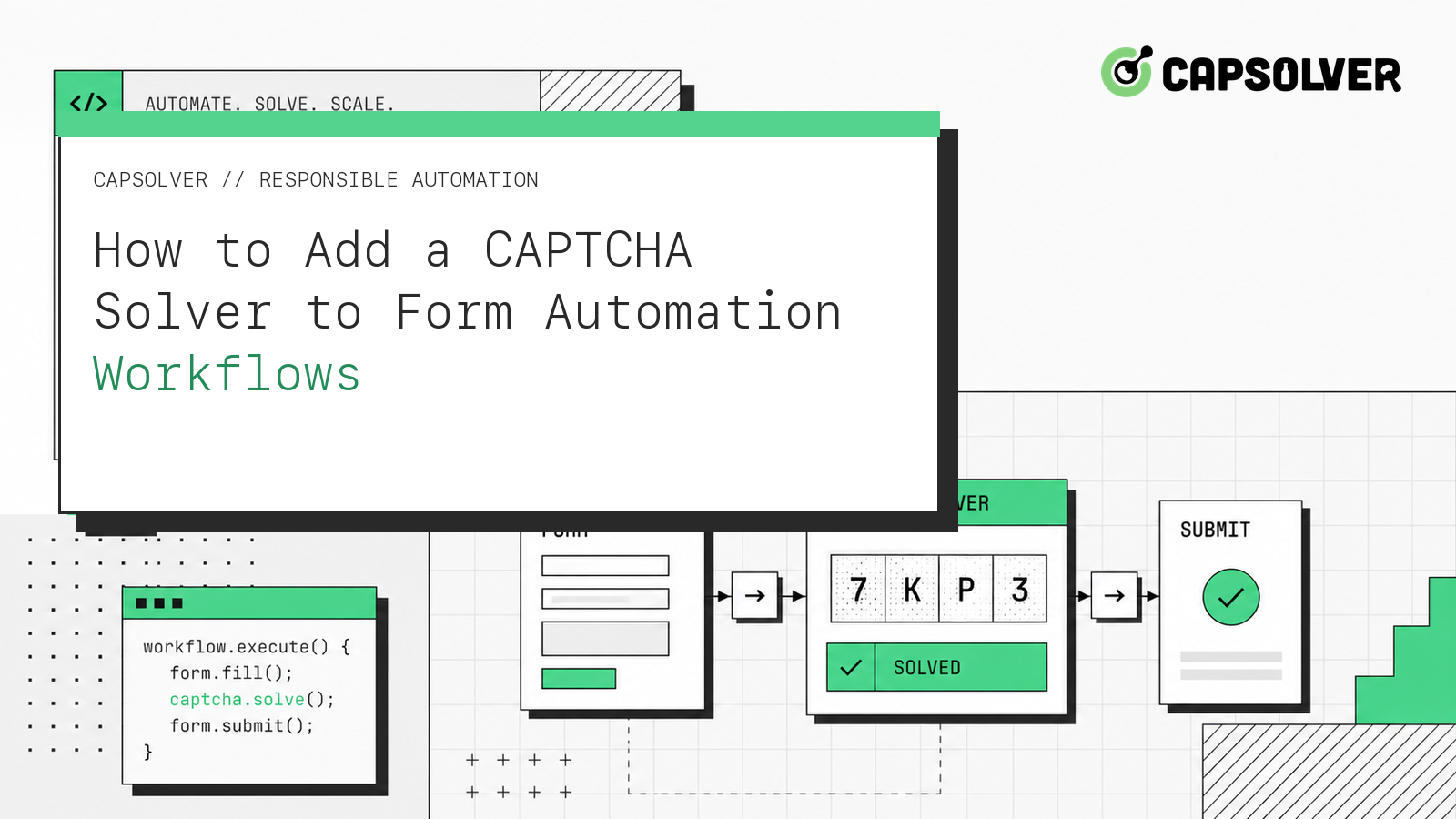
How to Add a CAPTCHA Solver to Form Automation Workflows
A form automation captcha solver is an error-recovery component for a permitted form workflow, not a shortcut around authorization. CapSolver can provide a reCAPTCHA solution through the documented task API while your application preserves inputs, browser context, consent, and the final submission rule. The safest sequence is detect, snapshot, create one task, poll with a deadline, apply the result in the same session, and verify the form's own confirmation state. This articl
Ethan Collins
13-Aug-2026
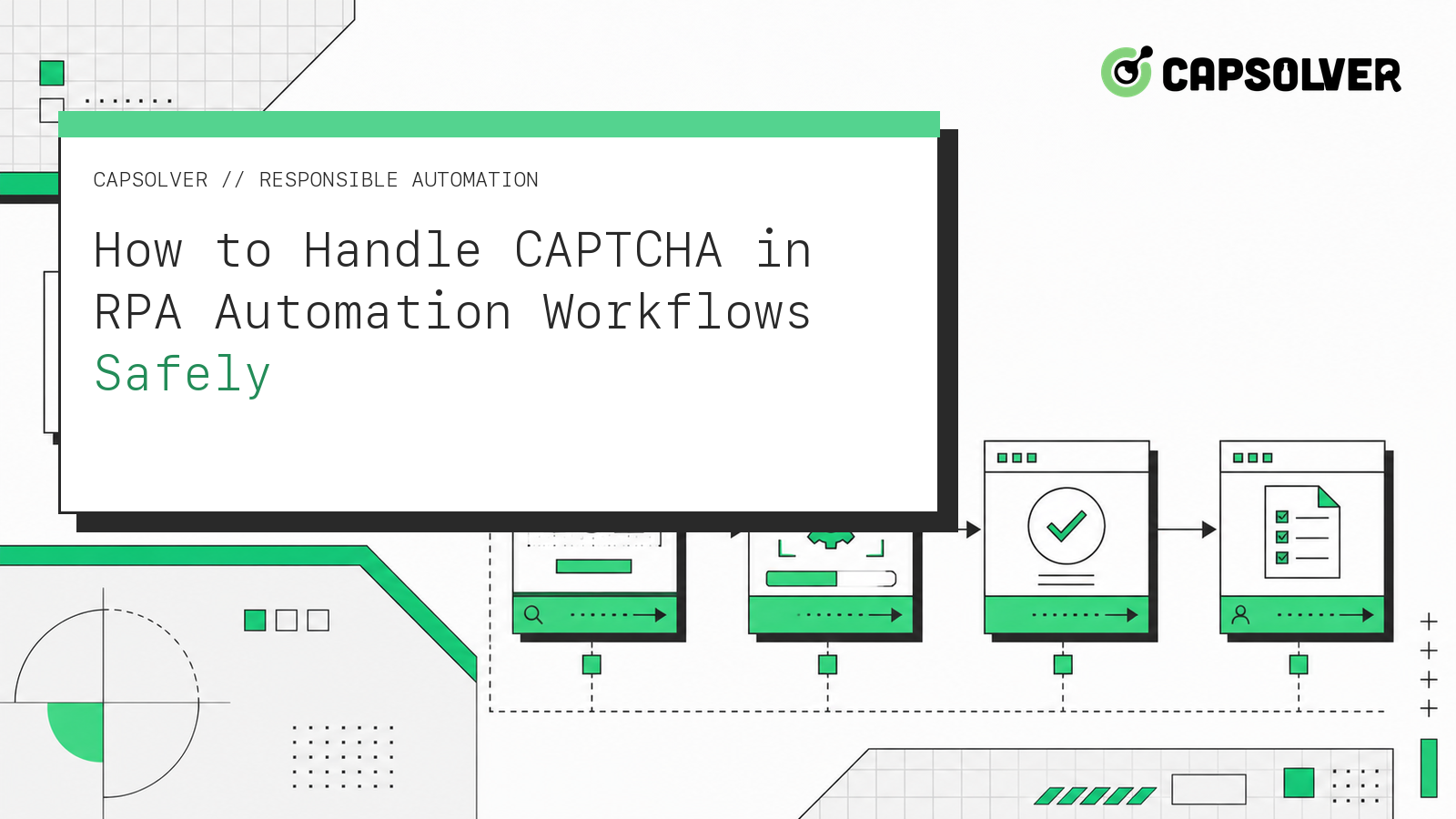
How to Handle CAPTCHA in RPA Automation Workflows Safely
RPA CAPTCHA automation is reliable only when CAPTCHA becomes an explicit workflow state. CapSolver can provide the CAPTCHA handling layer through its browser extension or documented API, while the RPA platform controls process scope, credentials, timeouts, and business validation. This avoids the common failure where a robot keeps clicking after verification appears, loses form state, or submits twice. A production design pauses at detection, waits for one bounded result, ver
Ethan Collins
12-Aug-2026
How to Handle CAPTCHA in Automated QA Testing
Handle CAPTCHA in automated QA testing with controlled test fixtures, CapSolver browser integration, bounded retries, and reliable assertions.
Ethan Collins
10-Aug-2026