











Why Is Your Automation Triggering CAPTCHAs?

Ethan Collins
How to use CapSolver
04-Jun-2026
TL;DR
- Automation triggering CAPTCHAs usually means the site sees risk signals in timing, browser behavior, cookies, IP reputation, JavaScript execution, or protected action flow.
- CAPTCHA systems evaluate context, not one header or one request, so fixing only the user agent rarely solves the root cause.
- Real browser sessions, stable cookies, consistent proxy routes, and human-like task pacing reduce unnecessary challenge loops in authorized workflows.
- Structured logs should capture status codes, challenge type, token state, proxy route, browser context, and retry count.
- CapSolver can support authorized QA, RPA, public data monitoring, and browser automation workflows when CAPTCHA handling is allowed.
Introduction
Automation triggering CAPTCHAs is a signal mismatch, not always a failure of your script. A protected site may see requests that look too fast, too stateless, too uniform, or too different from normal browser traffic. Modern traffic validation also checks whether JavaScript ran, whether cookies persisted, whether a token matches the action, and whether the network route changed mid-session. For authorized automation, CapSolver can be part of a controlled CAPTCHA handling workflow while your team keeps permissions, rate limits, and audit logs in place. This guide explains the most common reasons automation triggers CAPTCHAs and how to diagnose them responsibly.
Why Automation Triggers CAPTCHAs
Automation triggering CAPTCHAs usually starts when a risk system sees behavior that does not match expected user traffic. That can happen even when the automation is legitimate. QA scripts, RPA jobs, monitoring agents, and scraping tools often move through pages faster than a person, reuse the same request shape, skip assets, or lose browser state between actions.
Google's reCAPTCHA v3 documentation describes a score-based model that evaluates interactions and actions, while Cloudflare's Turnstile widget documentation shows that challenge widgets can be rendered implicitly or explicitly in client-side flows. AWS also documents CAPTCHA and Challenge actions as part of AWS WAF traffic controls. The common theme is simple: CAPTCHA decisions are made from context.
For teams using browser automation, the first job is not to solve the challenge. The first job is to understand why automation triggering CAPTCHAs happens in that workflow.
Common Risk Signals Behind CAPTCHA Prompts
Automation triggering CAPTCHAs often comes from several small mismatches at once. A single unusual signal may be tolerated. A cluster of unusual signals can push the request into a challenge state.
Common triggers include:
- Request bursts that are faster than normal users.
- Missing JavaScript execution on pages that expect browser-side checks.
- Cookies or local storage being cleared between steps.
- A proxy route changing after the first page view.
- Reused fingerprints across many accounts or sessions.
- Direct calls to protected API endpoints before loading the page.
- Incomplete headers or browser features that do not match the claimed client.
- Repeated failed form submissions, login attempts, or checkout actions.
The most useful diagnosis is comparative. Capture one successful manual browser path and one automated path. Compare timing, page loads, cookies, token creation, protected requests, status codes, and redirects. MDN's user agent guidance is a good reminder that user agent strings are only one part of browser behavior and should not be treated as a complete identity.
If automation triggering CAPTCHAs appears after a deployment, compare the new release against the last stable browser trace before changing provider settings.
Browser Context Matters More Than Headers
Automation triggering CAPTCHAs is common when a script uses plain HTTP requests for a workflow that expects a full browser. Modern protection can depend on JavaScript execution, canvas or storage behavior, resource loading order, and token timing. A request library can fetch HTML, but it does not automatically behave like Chrome, Safari, or Firefox.
For authorized workflows, use a real browser engine when the site expects one. Playwright, Selenium, and Puppeteer can preserve state across navigation, form entry, token handling, and protected fetch calls. CapSolver documents automation tool integration for Selenium, Puppeteer, Playwright, and similar tools, which is the right direction when the workflow already needs browser behavior.
A good browser context should remain stable for:
- Initial page navigation.
- Challenge rendering.
- Cookie storage.
- Protected form submission.
- Follow-up API calls made by the page.
- Error logging and screenshots.
If the automation opens a new context for every action, the site may see each step as a new visitor with no history. That makes automation triggering CAPTCHAs more likely.
In practice, automation triggering CAPTCHAs often drops once the same browser context carries the full task from landing page to final action.
Token And Cookie State Often Breaks
Automation triggering CAPTCHAs can happen because the token exists but does not match the action. Google notes that reCAPTCHA v3 tokens should be sent immediately for verification and that tokens expire after two minutes. That matters for automation because a token collected too early, reused too late, or submitted with the wrong action can fail validation.
AWS WAF challenges can also rely on token state. If a browser receives a WAF token cookie and your script switches proxy, browser profile, or cookie jar, the next request may not look like the same client. The result can be another challenge, a 403 response, or a loop that looks like the site is broken.
When diagnosing token issues, log:
- Challenge type, such as reCAPTCHA, Turnstile, or AWS WAF.
- Token creation time and submission time.
- Whether the cookie jar changed.
- Whether the proxy route changed.
- Whether the protected action name matches the expected action.
- Whether the response failed validation or asked for another challenge.
CapSolver's reCAPTCHA v2 documentation shows a createTask and getTaskResult flow and includes fields such as website URL, website key, proxy, callback behavior, and invisible mode. Those details matter because CAPTCHA handling is usually tied to the page and the action, not just the domain.
If automation triggering CAPTCHAs continues after token handling changes, check whether the token is being applied to a different page action than the one that created it.
Proxy And IP Reputation Can Trigger Extra Checks
Automation triggering CAPTCHAs often increases when the IP route does not fit the session. A clean browser profile can still receive challenges if requests come from a high-risk network, a data center range, a mismatched geography, or a route that changes during one task.
The goal is consistency. If a workflow starts on one proxy, keep that proxy for the full browser context. If the target site binds challenge state to an IP or session token, rotating mid-flow can make the next request look unrelated. CapSolver's proxy setup guidance is useful when a CAPTCHA task must match the same network route used by the browser.
Use this quick comparison when reviewing routes:
| Signal | Low-risk pattern | Higher-risk pattern |
|---|---|---|
| Session route | Same proxy through the task | Proxy changes after token creation |
| Cookie state | One persistent browser context | New context for every request |
| Request timing | Natural delay and wait states | Fixed bursts at identical intervals |
| Page flow | Loads page before protected action | Calls protected endpoint directly |
| Error handling | Stops and logs challenge state | Retries until blocked |
This table does not guarantee access. It helps teams reduce accidental risk signals in workflows they are allowed to run.
When automation triggering CAPTCHAs correlates with one proxy pool or geography, separate route quality from application logic before changing the script.
Request Timing And Retries Create Loops
Automation triggering CAPTCHAs can be caused by retry logic that is too aggressive. Many agents treat a challenge page, 403, 405, or token error as a temporary network failure. Then they retry with the same state, same route, same headers, and same invalid token. The protection system sees repeated suspicious behavior, and the automation sees only more CAPTCHA prompts.
Add stop conditions. If a response contains challenge markup, CAPTCHA provider scripts, WAF headers, token errors, or a sudden redirect to verification, stop the normal retry loop. Return a structured error to the agent or queue:
challenge_detectedproviderstatus_codetoken_presentcookie_countproxy_idbrowser_context_idretry_countrecommended_next_step
Automation triggering CAPTCHAs becomes easier to fix when the tool reports the real state. A generic "request failed" message hides the cause and encourages repeated attempts.
If automation triggering CAPTCHAs only appears after retries begin, the retry policy is probably amplifying the original issue.
When A CAPTCHA Solver Fits The Workflow
Automation triggering CAPTCHAs does not automatically mean a solver should be used. First confirm that the automation is permitted, the target data or action is authorized, and the site policy allows the workflow. CAPTCHA handling should support legitimate tasks such as QA testing, account-owned RPA, public data monitoring, accessibility testing, and internal operations.
When CAPTCHA handling is appropriate, connect it to the exact challenge type. CapSolver has product and documentation paths for Cloudflare Turnstile, AWS WAF, and reCAPTCHA task flows. The clean pattern is to detect the challenge, collect required page parameters, create the task, retrieve the result, and apply the token or cookie in the same browser context.
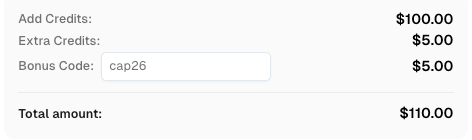
Redeem Your CapSolver Bonus Code
Boost your automation budget instantly!
Use bonus code CAP26 when topping up your CapSolver account to get an extra 5% bonus on every recharge — with no limits.
Redeem it now in your CapSolver Dashboard
Do not invent parameters. Use the task fields documented for the specific provider. For example, AWS WAF workflows can require different information than reCAPTCHA or Turnstile. Treat the solver as one part of a browser workflow, not as a replacement for state management.
Responsible Automation Checklist
Automation triggering CAPTCHAs should lead to a review of both technical design and permission boundaries. Technical capability does not grant permission to access private, restricted, sensitive, or unauthorized data. Keep rate limits, audit logs, and clear ownership rules in place.
Use this checklist before scaling:
- Confirm written permission or a clear policy basis for the automation.
- Respect robots, terms, account limits, and data access boundaries.
- Use browser automation only where browser behavior is required.
- Preserve cookies, storage, proxy route, and user agent within a session.
- Avoid fixed high-speed request patterns.
- Detect challenge states before retrying.
- Store screenshots and response metadata for debugging.
- Keep CAPTCHA handling provider-specific and documented.
- Stop automation when authorization or identity checks fail.
The practical goal is not to hide automation. The goal is to make authorized automation behave consistently, report its real state, and avoid unnecessary challenge loops.
Conclusion/CTA
Automation triggering CAPTCHAs usually means the workflow is missing context that the protected site expects: browser execution, token freshness, stable cookies, consistent network route, reasonable timing, or a valid action flow. Start with logs and side-by-side browser comparison, then fix state handling before adding a solver. For authorized CAPTCHA handling in browser automation, QA, RPA, and public data monitoring workflows, CapSolver can help connect provider-specific challenge solving to a controlled automation pipeline.
FAQ
Why is my automation triggering CAPTCHAs even with normal headers?
Headers are only one signal. CAPTCHA systems can also evaluate JavaScript execution, cookies, browser state, request timing, IP reputation, token freshness, and whether the request follows the expected page flow.
Can I stop automation triggering CAPTCHAs by slowing requests?
Slowing requests can help, but it is rarely enough by itself. You also need stable browser context, persistent cookies, consistent proxy routing, correct token timing, and structured error handling.
Should I use Playwright or plain HTTP requests?
Use Playwright, Selenium, or Puppeteer when the protected workflow expects browser-side JavaScript, cookies, widgets, or dynamic requests. Plain HTTP requests are better for endpoints that are explicitly designed for API access.
When should I use a CAPTCHA solving service?
Use a CAPTCHA solving service only for authorized workflows where CAPTCHA handling is allowed and technically required. Detect the challenge type first, then follow provider-specific documentation for parameters, tokens, cookies, and browser state.
Is automation triggering CAPTCHAs a sign that access is not allowed?
Sometimes it is a permission signal, and sometimes it is a risk-control signal for a legitimate workflow. Review site policy, account permissions, rate limits, and data boundaries before continuing.
Compliance Disclaimer: The information provided on this blog is for informational purposes only. CapSolver is committed to compliance with all applicable laws and regulations. The use of the CapSolver network for illegal, fraudulent, or abusive activities is strictly prohibited and will be investigated. Our captcha-solving solutions enhance user experience while ensuring 100% compliance in helping solve captcha difficulties during public data crawling. We encourage responsible use of our services. For more information, please visit our Terms of Service and Privacy Policy.
More
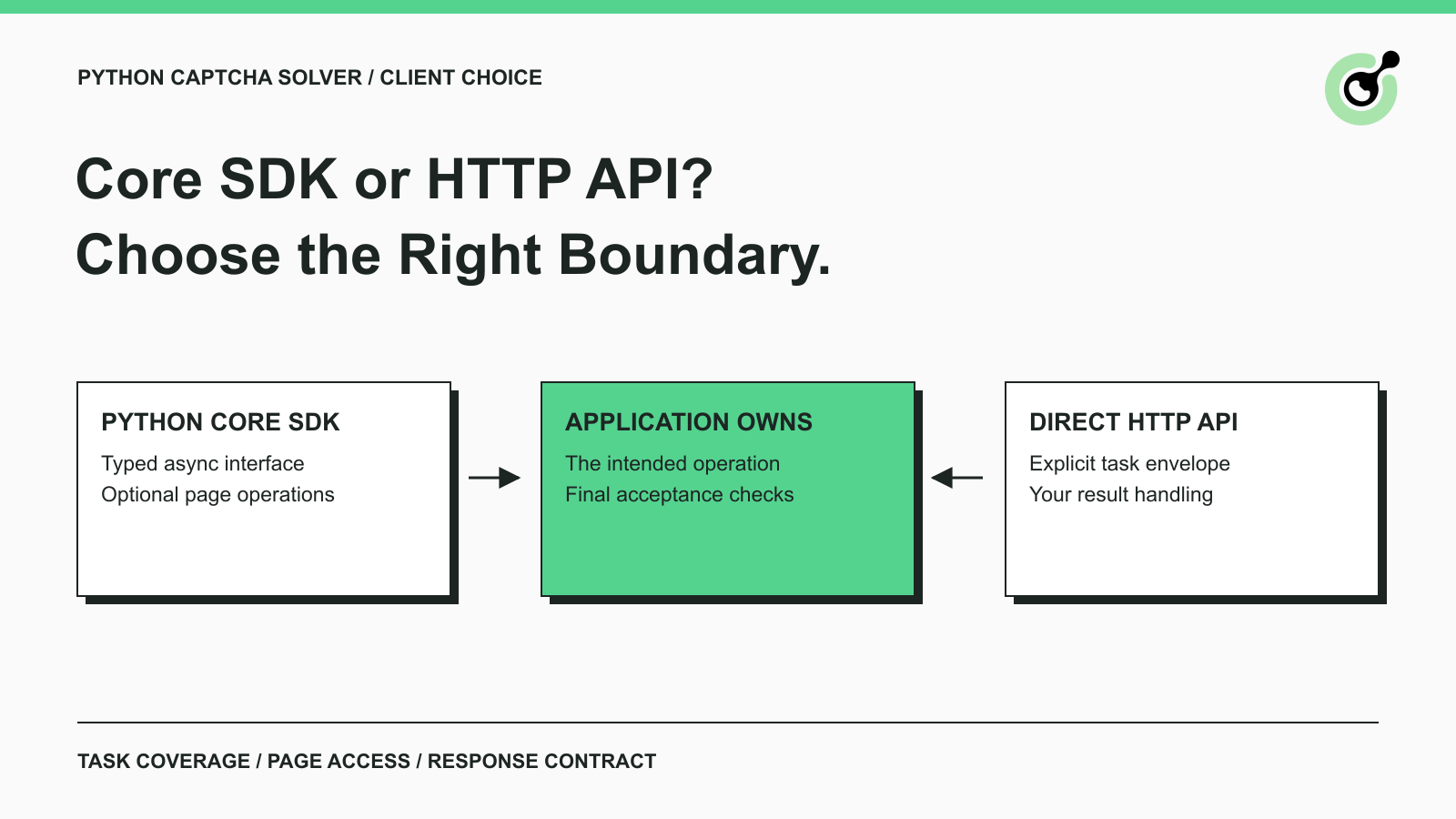
CapSolver Python Core SDK vs HTTP API: Which Should You Use?
Choose the CapSolver Python Core SDK or direct HTTP API by task support, page access, response handling, and the responsibilities your application owns.
Ethan Collins
16-Sep-2026
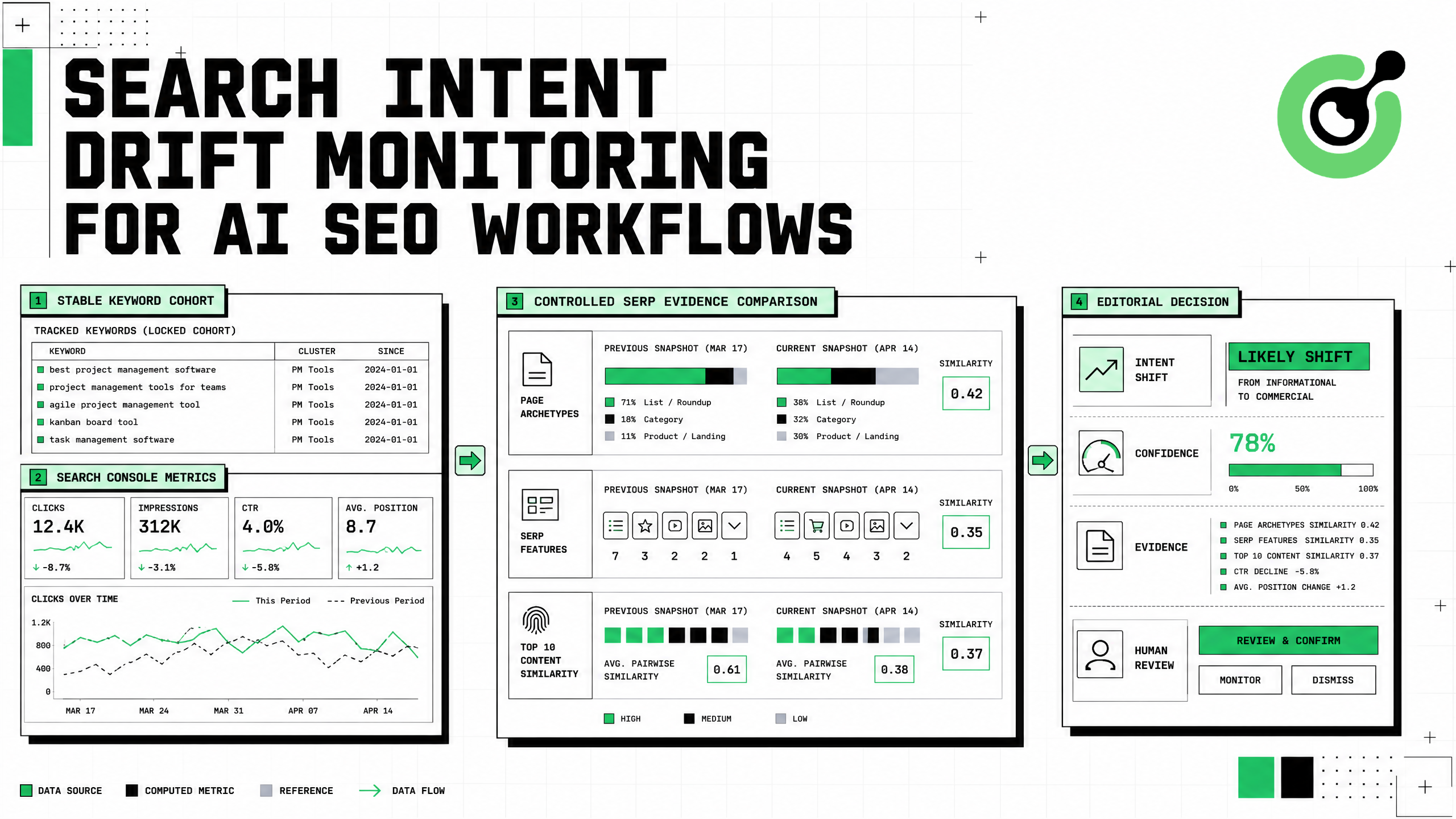
Search Intent Drift Monitoring for AI SEO Workflows
Build search intent drift monitoring with Search Console data, controlled SERP observations, intent labels, confidence gates, evidence, and safe automation.
Ethan Collins
31-Aug-2026
How to Add Gumloop CAPTCHA Solving to Web Workflows
Build Gumloop CAPTCHA solving with a verified HTTP contract, controlled recovery branch, retry budget, browser-state checks, and human fallback.

Nikolai Smirnov
21-Aug-2026
How to Add a CAPTCHA Solver to Form Automation Workflows
A form automation captcha solver is an error-recovery component for a permitted form workflow, not a shortcut around authorization. CapSolver can provide a reCAPTCHA solution through the documented task API while your application preserves inputs, browser context, consent, and the final submission rule. The safest sequence is detect, snapshot, create one task, poll with a deadline, apply the result in the same session, and verify the form's own confirmation state. This articl
Ethan Collins
13-Aug-2026
How to Handle CAPTCHA in RPA Automation Workflows Safely
RPA CAPTCHA automation is reliable only when CAPTCHA becomes an explicit workflow state. CapSolver can provide the CAPTCHA handling layer through its browser extension or documented API, while the RPA platform controls process scope, credentials, timeouts, and business validation. This avoids the common failure where a robot keeps clicking after verification appears, loses form state, or submits twice. A production design pauses at detection, waits for one bounded result, ver
Ethan Collins
12-Aug-2026
How to Handle CAPTCHA in Automated QA Testing
Handle CAPTCHA in automated QA testing with controlled test fixtures, CapSolver browser integration, bounded retries, and reliable assertions.
Ethan Collins
10-Aug-2026