











How to Solve reCAPTCHA in LangGraph Agents

Ethan Collins
How to use CapSolver
26-Aug-2026
TL;DR
- Install
capsolver-agentwith the LangChain extra and load its ready-made tools withget_langchain_tools(). - Bind those tools to the chat model and execute them inside a LangGraph
ToolNode. - For reCAPTCHA v2 token mode, provide the exact authorized page URL and site key; the returned token is
gRecaptchaResponseat the API level. - Put allowlists, retry limits, secret isolation, and human-review routing around the tool node.
- Use browser-mode recovery when a dynamic page requires detection and token injection inside the same session.
Introduction
The most maintainable way to solve reCAPTCHA in LangGraph agents is to treat challenge recovery as a typed tool node rather than embedding network logic in the model prompt. CapSolver's Agent SDK provides LangChain-compatible tools, while LangGraph provides explicit state, routing, error handling, and resumability. The model can decide that a supported challenge blocks the next authorized step, but a deterministic tool validates the page parameters, calls the solver, and returns a structured result. This architecture keeps API keys out of messages, makes retries observable, and prevents unrelated targets from being submitted. This tutorial builds a minimal graph, shows how to route tool calls, explains the reCAPTCHA v2 parameters, and adds production safeguards for browser automation, QA, RPA, and approved public-data workflows.
Where CapSolver Fits in a LangGraph State Machine
LangGraph is designed for stateful workflows in which nodes perform bounded work and edges control what happens next. CapSolver fits naturally into a dedicated tool node:
text
User-directed task
      ↓
Reasoning node identifies a supported challenge
      ↓
ToolNode executes CapSolver tool
      ↓
Structured solution or normalized error
      ↓
Browser resumes, retries, or requests human review
The model should decide when recovery is needed. It should not decide where secrets are stored, which hosts are authorized, or how many retries are permitted. Those decisions belong in deterministic application code.
The CapSolver AI blog includes agent integration patterns, and the CapSolver AI and automation FAQ explains how a recovery layer complements an existing agent stack.
Install the Agent Tools and LangGraph
The user-provided CapSolver Agent documentation specifies that capsolver-agent depends on capsolver-core. Install the core first, then the agent package with its LangChain integration.
bash
pip install git+https://github.com/capsolver-ai/capsolver-core.git
pip install "capsolver-agent[langchain] @ git+https://github.com/capsolver-ai/capsolver-agent.git"
pip install langchain-openai langgraph
Configure credentials through the runtime environment:
bash
export CAPSOLVER_API_KEY="CAP-xxxxxxxxxxxxxxxx"
export OPENAI_API_KEY="sk-xxxxxxxxxxxxxxxx"
The official CapSolver Agent repository documents this import path:
python
from capsolver_agent.langchain_tools import get_langchain_tools

tools = get_langchain_tools(api_key="YOUR_API_KEY")
The returned objects are LangChain-compatible BaseTool instances. The official LangChain tools guide explains that tools expose defined inputs and outputs to the model, while type information and descriptions help the model choose the correct action.
Understand the reCAPTCHA v2 Task Parameters
For a standard proxyless reCAPTCHA v2 task, the required inputs are the page URL and site key. CapSolver's official reCAPTCHA v2 documentation lists ReCaptchaV2TaskProxyLess for the built-in proxy path and separate Enterprise task types when the page uses reCAPTCHA Enterprise.
| Field | Requirement | Guidance |
|---|---|---|
captcha_type |
Required by the agent tool | Use the SDK's documented reCAPTCHA v2 identifier |
website_url |
Required | Send the full URL of the authorized page |
website_key |
Required | Use the exact site key loaded by the page |
| Enterprise payload | Conditional | Include only when the target's documented configuration requires it |
| Invisible flag or action | Conditional | Preserve values detected on the authorized page |
At the REST-task level, the solution token is returned as solution.gRecaptchaResponse. The Agent SDK wraps the core result in a structured dictionary so the graph can route on success or failure without parsing arbitrary prose.
For parameter discovery, see the CapSolver browser extension guide and the reCAPTCHA v2 implementation guide.
Build a LangGraph with CapSolver Tools
The example below loads the official CapSolver tools, binds them to a chat model, and places them in a ToolNode. The graph loops back to the reasoning node after each tool response.
python
import os
from typing import Literal

from capsolver_agent.langchain_tools import get_langchain_tools
from langchain_openai import ChatOpenAI
from langgraph.graph import START, StateGraph
from langgraph.graph.message import MessagesState
from langgraph.prebuilt import ToolNode, tools_condition

capsolver_tools = get_langchain_tools(
    api_key=os.environ["CAPSOLVER_API_KEY"]
)

model = ChatOpenAI(
    model="gpt-4o-mini",
    temperature=0,
).bind_tools(capsolver_tools)


def agent_node(state: MessagesState):
    response = model.invoke(state["messages"])
    return {"messages": [response]}


def safe_tool_error(error: Exception) -> str:
    return (
        "The challenge tool failed. Do not retry automatically. "
        "Return the workflow to operator review."
    )

builder = StateGraph(MessagesState)
builder.add_node("agent", agent_node)
builder.add_node(
    "tools",
    ToolNode(
        capsolver_tools,
        handle_tool_errors=safe_tool_error,
    ),
)
builder.add_edge(START, "agent")
builder.add_conditional_edges("agent", tools_condition)
builder.add_edge("tools", "agent")

graph = builder.compile()
The LangGraph ToolNode reference documents that ToolNode accepts BaseTool instances, executes tool calls, and supports configurable error handling. This makes it suitable for a recovery branch that must be observable and predictable.
Give the Agent a Narrow Instruction
The model needs enough context to call the correct tool, but it should not receive unrestricted authority. Construct the message from validated application data:
python
request = {
    "website_url": "https://staging.example.com/approved-form",
    "website_key": "6LcXXXXXXXXXXXXXXXXXXXXXXXXXXXXXXXXXXXXX",
}

messages = [
    (
        "system",
        "You operate only on approved workflows. If a supported reCAPTCHA "
        "blocks the next step, call the CapSolver solve_captcha tool once "
        "with the exact URL and site key supplied by the application. "
        "Never invent a target or request credentials. If solving fails, "
        "stop and request operator review.",
    ),
    (
        "user",
        "Continue the approved staging task. The browser reported a "
        f"reCAPTCHA v2 at {request['website_url']} with site key "
        f"{request['website_key']}.",
    ),
]

result = graph.invoke(
    {"messages": messages},
    config={"recursion_limit": 6},
)
A recursion limit prevents uncontrolled graph loops. In production, also restrict the allowed hostname before constructing the message and avoid storing solution tokens in traces.
Add a Host Allowlist Before the Graph
The CapSolver tools solve what they are asked to solve; your application must decide which jobs are authorized. Validate the page URL outside the model:
python
from urllib.parse import urlparse

ALLOWED_HOSTS = {
    "staging.example.com",
    "qa.example.com",
}


def validate_target(url: str) -> str:
    parsed = urlparse(url)
    if parsed.scheme != "https":
        raise ValueError("Only HTTPS targets are allowed")
    if parsed.hostname not in ALLOWED_HOSTS:
        raise PermissionError("Target host is not approved")
    return url
Use a tenant-specific allowlist or signed workflow manifest when multiple customers share the same platform. Do not allow natural-language instructions to modify this policy.
Route Success, Failure, and Human Review
A useful recovery graph needs three outcomes, not just “solved” and “crashed.” Normalize tool output into a workflow decision:
python
from typing import TypedDict

class RecoveryDecision(TypedDict):
    status: Literal["continue", "retry", "review"]
    reason: str


def classify_recovery(result: dict, attempt: int) -> RecoveryDecision:
    if result.get("success"):
        return {"status": "continue", "reason": "solution returned"}

    error = str(result.get("error", "unknown error"))
    if attempt == 0 and "timeout" in error.lower():
        return {"status": "retry", "reason": "one bounded retry allowed"}

    return {"status": "review", "reason": error}
Do not expose raw tokens in model messages when the browser can consume them directly. The ideal boundary is: tool result → trusted browser controller → submission outcome → redacted status back to the graph.
The CapSolver errors and troubleshooting FAQ provides common diagnostic paths, while the CapSolver response API guide explains result handling.
Token Mode vs Browser Mode
| Mode | Best when | Graph receives | Main operational concern |
|---|---|---|---|
| Token mode | URL and site key are known | Structured token result | Correct parameters and timely consumption |
| Browser mode | Widget parameters are dynamic | Solved page/session status | Same-page session continuity |
| Human review | Repeated or unsupported failure | Redacted error and screenshot reference | Preventing unbounded retries |
Token mode is usually simpler for known reCAPTCHA parameters. Browser mode is useful when an authorized Playwright flow needs detect() and solve_on_page() in the same session. The CapSolver Agent documentation maps solve_captcha to core token solving and solve_on_page to browser recovery.
Observability Without Leaking Secrets
Record graph transitions and operational metrics, not sensitive values. Useful fields include:
python
safe_event = {
    "workflow_id": "wf_01J...",
    "node": "tools",
    "tool": "solve_captcha",
    "target_host": "staging.example.com",
    "challenge_type": "recaptcha_v2",
    "attempt": 1,
    "duration_ms": 6420,
    "outcome": "success",
}
Never log the CapSolver API key, full solution token, authenticated cookies, or form data. Apply trace redaction before sending events to external observability systems.
Bonus Code: Use code WEBS at CapSolver Dashboard to get an extra 5% bonus on every recharge.
Production Checklist
A production LangGraph reCAPTCHA solver should have a hostname allowlist, fixed task policy, short token lifetime handling, bounded retries, trace redaction, explicit stop conditions, and an operator-review node. Test it against an authorized staging page before connecting it to unattended automation.
The CapSolver CAPTCHA-solving FAQ covers task behavior, and the CapSolver Python scraping guide provides browser automation practices.
Responsible Use
Use this workflow only on systems you own, test, or have explicit permission to automate. Challenge solving does not grant access rights. Respect site terms, rate limits, privacy obligations, and purpose restrictions. Require human confirmation before the graph submits forms, changes account data, or performs any high-impact action.
Conclusion
A LangGraph reCAPTCHA solver is most reliable when solving is an explicit tool node with strict routing. Load CapSolver's ready-made LangChain tools, bind them to the model, execute them through ToolNode, and keep authorization, secrets, retries, and token consumption in deterministic application code. This gives the agent a recovery capability without giving it unrestricted control.
Start with CapSolver, validate the graph against an approved staging workflow, and add trace redaction and human review before scaling.
FAQ
Which CapSolver import should I use with LangGraph?
Use from capsolver_agent.langchain_tools import get_langchain_tools, then call get_langchain_tools(api_key=...) to obtain LangChain-compatible tools that can be passed to ToolNode.
What inputs are required for reCAPTCHA v2 token mode?
The page URL and reCAPTCHA site key are required. Enterprise, invisible, action, or session fields should be included only when the authorized page actually uses them.
Should the LangGraph model receive the solution token?
Prefer sending the token directly from the trusted tool layer to the browser controller. Return only a redacted success or failure event to the reasoning graph when possible.
How many automatic retries should the graph allow?
Usually one bounded retry is sufficient for a transient timeout. Repeated rejection should route to human review because the URL, key, session, or page configuration may be incorrect.
Can this pattern handle dynamic browser challenges?
Yes. Use the browser-capable CapSolver core methods through a controlled tool when the workflow needs detection and page-level recovery in the same Playwright session.
Compliance Disclaimer: The information provided on this blog is for informational purposes only. CapSolver is committed to compliance with all applicable laws and regulations. The use of the CapSolver network for illegal, fraudulent, or abusive activities is strictly prohibited and will be investigated. Our captcha-solving solutions enhance user experience while ensuring 100% compliance in helping solve captcha difficulties during public data crawling. We encourage responsible use of our services. For more information, please visit our Terms of Service and Privacy Policy.
More
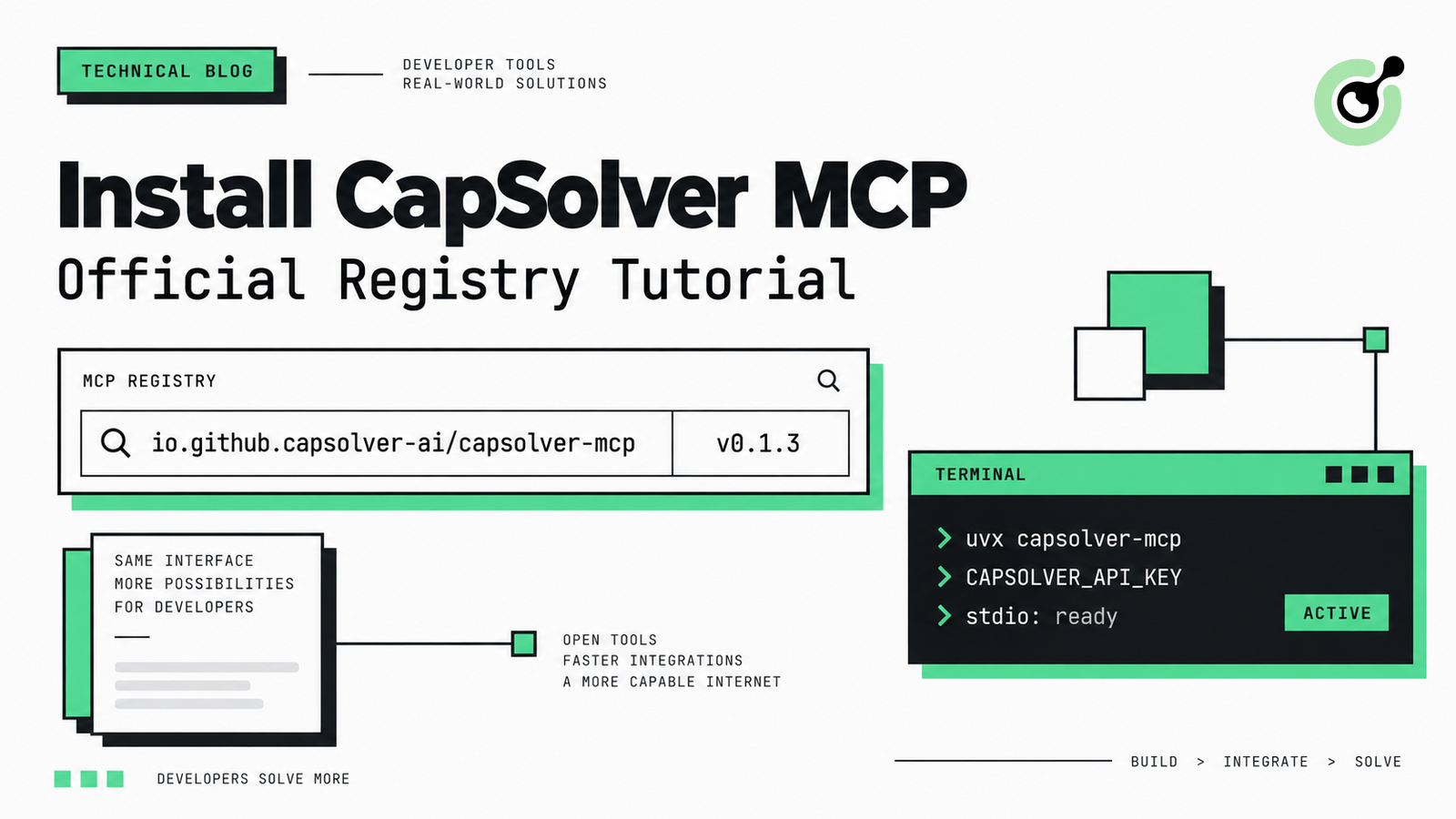
How to Install CapSolver MCP from the Official MCP Registry
Find CapSolver MCP in the Official MCP Registry, install version 0.1.3 with uvx or pip, configure a local client, and verify the stdio tools.

Khadija Santos
18-Sep-2026
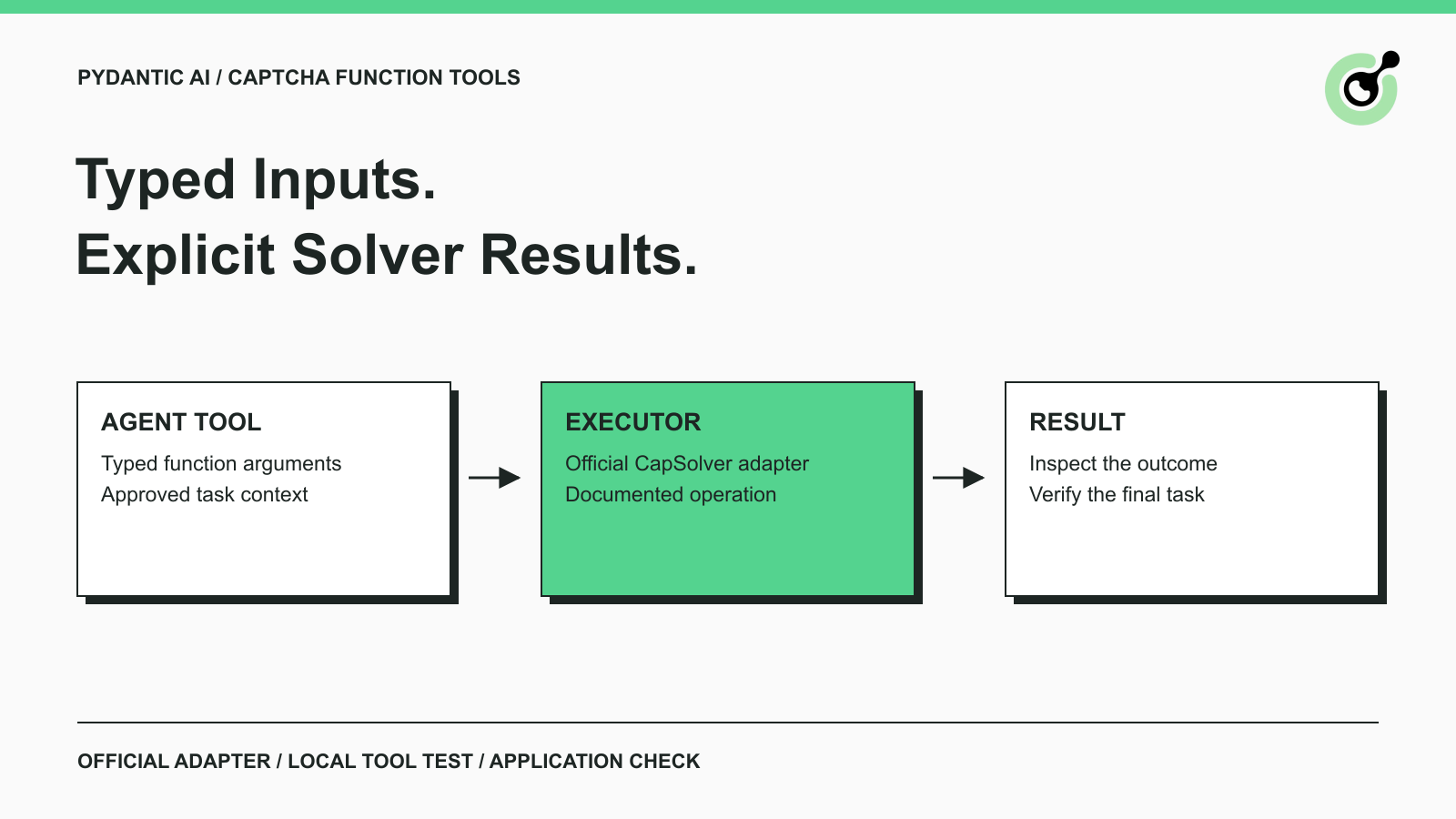
Pydantic AI CAPTCHA Tools: Typed Inputs and Solver Results
Add CAPTCHA tools to Pydantic AI using the official CapSolver adapter, test tool execution locally, and handle typed inputs and structured solver results.
Khadija Santos
18-Sep-2026
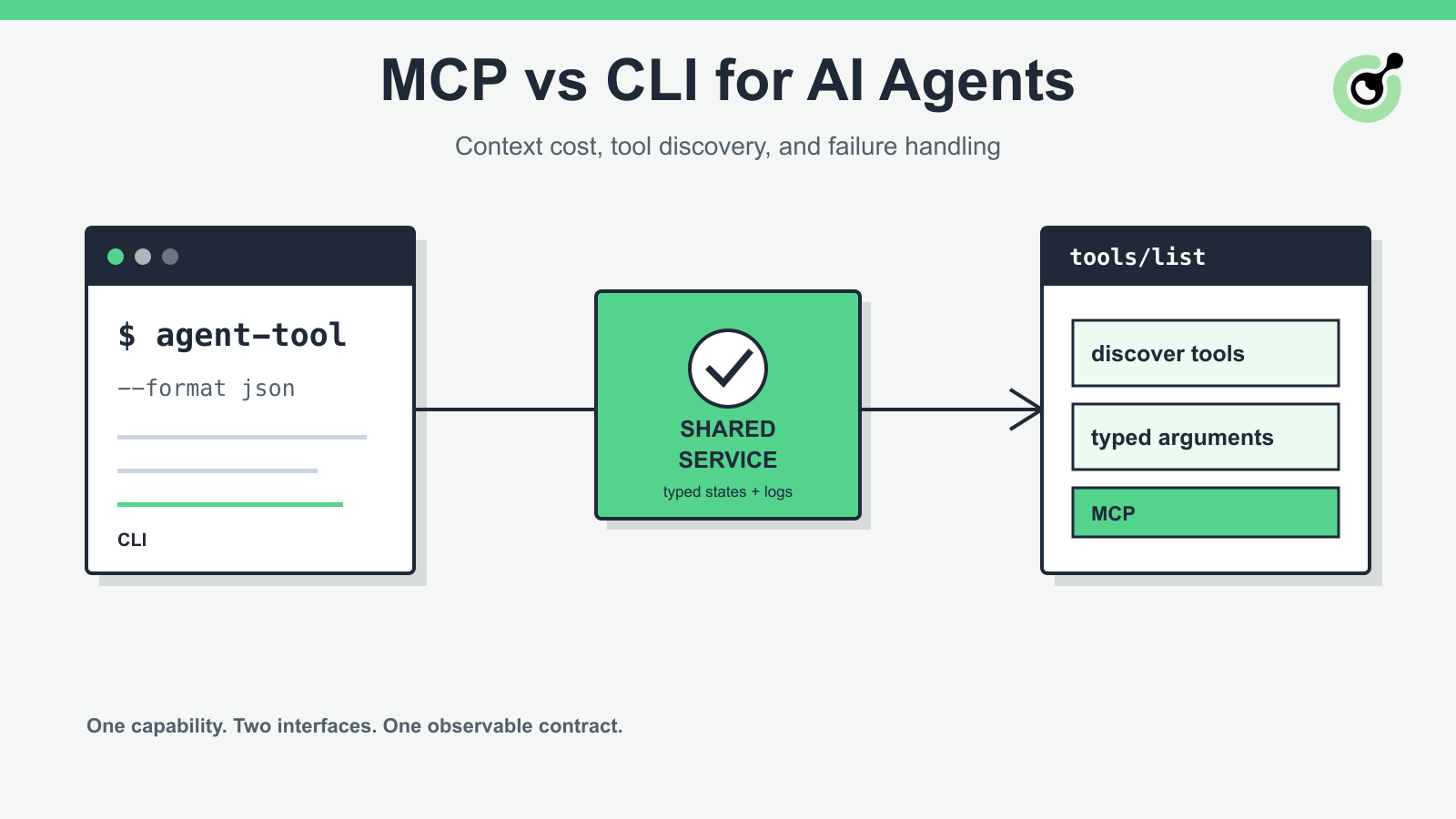
MCP vs CLI for AI Agents: Context Cost and Failure Handling
Compare MCP and CLI interfaces for AI agents across tool discovery, context cost, security, debugging, failure handling, and hybrid architecture.

Nikolai Smirnov
18-Sep-2026
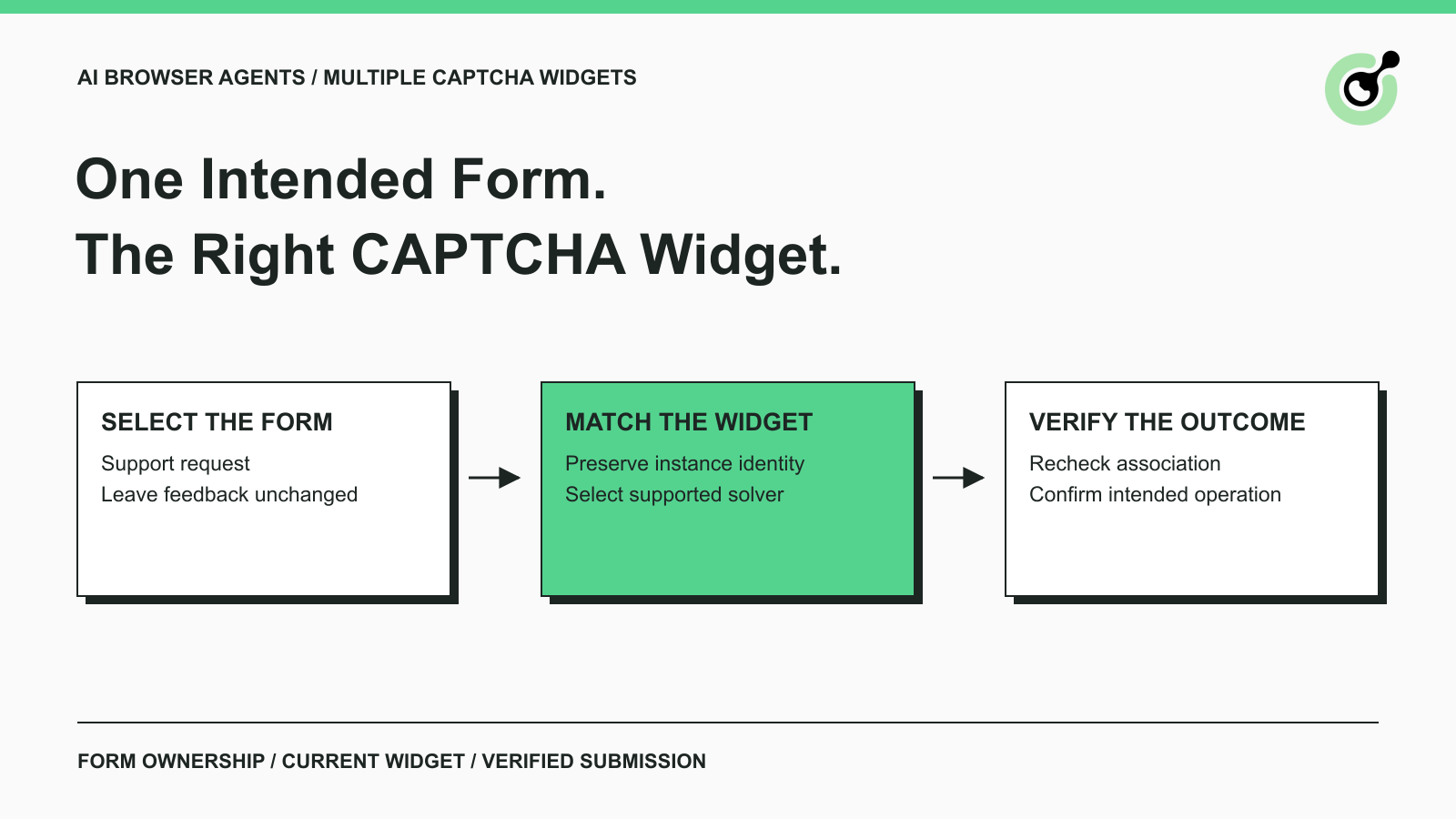
How to Handle Multiple CAPTCHA Widgets in AI Browser Agents
Handle multiple CAPTCHA widgets on one page with explicit form ownership, solver parameters, result routing, and checks for the intended AI agent action.

Lucas Mitchell
15-Sep-2026

CapSolver MCP Server Is Now Available for AI Agents
Install CapSolver MCP Server from PyPI and give compatible AI agents five tools for authorized CAPTCHA handling through the Model Context Protocol.

Sora Fujimoto
11-Sep-2026

AI Agents vs Scripts: How to Choose for Web Automation
Choose between AI agents, scripts, and hybrid web automation by task uncertainty, testability, cost, and the controls needed for reliable execution.
Lucas Mitchell
11-Sep-2026