











Web Access Infrastructure for AI Agents

Emma Foster
Machine Learning Engineer
24-Jun-2026
TL;DR
- AI agents require sophisticated web access infrastructure to interact with the internet effectively.
- Key components include headless browsers, proxy networks, and advanced CAPTCHA solving mechanisms.
- Robust infrastructure ensures agents can handle bot detection, maintain anonymity, and handle dynamic web content.
- CapSolver provides essential tools for AI agents to overcome web access challenges, particularly CAPTCHA and bot protection.
- Building a resilient infrastructure is crucial for scalable and reliable AI agent operations.
Introduction
In the rapidly evolving landscape of artificial intelligence, AI agents are becoming indispensable for automating complex online tasks, from data collection and market research to customer service and content generation. However, the efficacy of these agents hinges critically on their ability to reliably access and interact with the vast and dynamic environment of the World Wide Web. This necessitates a robust web access infrastructure for AI agents, a foundational layer that enables them to navigate websites, extract information, and perform actions without encountering barriers designed for human users. Without a well-designed infrastructure, AI agents can be easily detected and blocked by sophisticated bot protection systems, rendering them ineffective. Therefore, understanding and implementing the right web access strategies is paramount for any AI agent deployment. For solutions that empower AI agents to overcome these challenges, consider exploring CapSolver.
The Core Components of Web Access Infrastructure
Building an effective web access infrastructure for AI agents involves several critical components working in concert to mimic human browsing behavior and avoid detection.
Headless Browsers and Browser Automation
At the heart of AI agent web interaction are headless browsers. These are web browsers without a graphical user interface, allowing programmatic control over web pages. Tools like Puppeteer, Playwright, and Selenium enable agents to:
- Render dynamic content: Execute JavaScript to load and interact with modern Single Page Applications (SPAs) built on frameworks like React, Angular, or Vue.js. Unlike simple HTTP request libraries, headless browsers construct the full Document Object Model (DOM), ensuring the agent sees exactly what a human user would see.
- Simulate user actions: Click buttons, fill forms, scroll through infinite feeds, and navigate complex multi-step workflows just like a human user. This includes handling hover states, drag-and-drop interactions, and asynchronous content loading.
- Manage sessions: Handle cookies, local storage, session storage, and user profiles to maintain state across interactions. This is crucial for tasks requiring authentication, such as accessing personalized dashboards or managing e-commerce shopping carts.
However, even headless browsers can be detected. Out-of-the-box configurations often leak distinctive signatures, such as the webdriver property in the navigator object, or specific font rendering characteristics. Advanced techniques for web automation infrastructure stack for AI agents involve mimicking human-like delays, mouse movements, and keystrokes to avoid detection. For a deeper dive into this, understanding the agentic browser automation layer is crucial. This layer acts as an intermediary, injecting specialized scripts to normalize the browser fingerprint and orchestrating realistic interaction patterns that confound heuristic analysis engines.
Proxy Networks for Anonymity and Geo-Targeting
To prevent IP blocking and enable geo-specific access, AI agents rely on proxy networks. These networks route agent traffic through different IP addresses, making it appear as if requests are originating from various locations and devices. The quality and diversity of the proxy pool directly dictate the agent's ability to operate at scale without triggering rate limits or outright bans. Key types include:
- Residential Proxies: IPs assigned by Internet Service Providers (ISPs) to real homeowners. These are highly effective at mimicking real users because they carry the reputation of a standard consumer internet connection. They are essential for accessing sites with strict anti-bot measures, though they tend to be more expensive and exhibit higher latency.
- Datacenter Proxies: IPs originating from massive data centers and cloud hosting providers. While they offer superior speed and lower costs, their IP ranges are well-known and frequently scrutinized or blocked by security vendors. They are best suited for tasks on less heavily defended targets or for tasks requiring massive throughput.
- Mobile Proxies: IPs assigned to mobile devices via cellular networks (3G/4G/5G). These are particularly valuable because mobile IPs are frequently shared among many users via Carrier-Grade NAT (CGNAT), making it very difficult for websites to block a specific IP without affecting legitimate human traffic.
- Rotating Proxies: Systems that automatically switch IP addresses with each request or after a set interval, enhancing anonymity and distributing the request load across a vast pool of addresses.
Choosing the right proxy solution is vital for maintaining uptime and avoiding detection. A sophisticated infrastructure often employs a "waterfall" approach, starting with cheaper datacenter proxies and falling back to premium residential or mobile proxies only when a block is encountered. For more on how proxies fit into a broader strategy, explore bot protection infrastructure for AI agents.
CAPTCHA Solving Mechanisms
CAPTCHAs (Completely Automated Public Turing test to tell Computers and Humans Apart) are a primary barrier for AI agents. Overcoming them requires specialized solutions. This is where services like CapSolver become indispensable, offering:
- Automated CAPTCHA Solving: Utilizing advanced AI and human-powered solutions to solve various CAPTCHA types (reCAPTCHA v2/v3, Cloudfalre Turndtile, etc.).
- Integration APIs: Directly integrating CAPTCHA solving capabilities into agent workflows, ensuring uninterrupted operation. For insights into the best options, refer to best CAPTCHA API for AI agents in 2026.
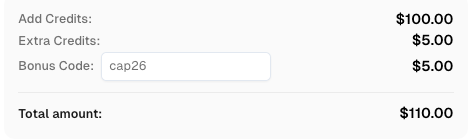
Redeem Your CapSolver Bonus Code
Boost your automation budget instantly!
Use bonus code CAP26 when topping up your CapSolver account to get an extra 5% bonus on every recharge — with no limits.
Redeem it now in your CapSolver Dashboard
Bot Detection Resilience and Evasion Techniques
Websites employ sophisticated bot detection systems that analyze various signals, including browser fingerprints, network patterns, and behavioral anomalies. Providers like Cloudflare, Akamai, and DataDome continuously update their algorithms to identify non-human traffic. A robust web access infrastructure must incorporate evasion techniques such as:
- Browser Fingerprint Spoofing: Modifying browser headers, user agents, screen resolutions, hardware concurrency, and WebGL rendering characteristics to appear unique and human-like. The goal is not just to randomize these values, but to present a cohesive and logically consistent profile that matches a real-world device.
- Behavioral Mimicry: Introducing random delays, varied scroll speeds, and realistic click patterns. Human users do not click links the exact millisecond they appear, nor do they scroll at a perfectly constant velocity. Agents must incorporate mathematical models of human behavior (like Fitts's Law for mouse movements) to pass behavioral analysis checks.
- Stealth Mode: Using specialized browser configurations and plugins (such as
puppeteer-extra-plugin-stealth) to hide automation indicators. This involves patching JavaScript APIs that are commonly used by security scripts to detect the presence of WebDriver or other automation frameworks. - TLS/JA3 Fingerprinting: Modifying the Transport Layer Security (TLS) handshake parameters to match those of standard consumer browsers rather than the default signatures of programming languages like Python or Node.js.
For more on this, see scalable CAPTCHA solving for production agents. The continuous maintenance of these evasion techniques requires dedicated engineering effort, as security vendors are constantly finding new ways to identify synthetic traffic.
Web Scraping Best Practices and Ethics
While building powerful web access infrastructure, it's crucial to adhere to ethical guidelines and legal frameworks. Responsible AI agent deployment involves balancing the need for data and automation with respect for the target websites' resources and terms of service. Key practices include:
- Respecting
robots.txt: Adhering to website crawling policies defined in therobots.txtfile, which specifies which parts of the site are permissible to access programmatically. - Rate Limiting: Avoiding overwhelming target servers with excessive requests. Implementing exponential backoff and concurrency limits ensures that the agent's activity does not degrade the performance of the website for human users.
- Data Privacy: Ensuring compliance with regulations like the General Data Protection Regulation (GDPR) and the California Consumer Privacy Act (CCPA) when handling collected data. Agents must be programmed to avoid scraping personally identifiable information (PII) unless explicitly authorized and legally permissible.
- Transparent Identification: Where appropriate, identifying the agent's user-agent string with contact information, allowing website administrators to reach out if the automation is causing issues.
For further reading on ethical web scraping, consult sources like the Electronic Frontier Foundation [1] and W3C Web Standards [2]. Adhering to these principles not only mitigates legal risks but also fosters a more sustainable and cooperative ecosystem for web automation.
Comparison Summary: DIY vs. Managed Solutions
| Feature | DIY Web Access Infrastructure | Managed Web Access Solutions (e.g., CapSolver) |
|---|---|---|
| Setup & Maintenance | High effort, requires deep technical expertise, ongoing updates | Low effort, plug-and-play, managed by provider |
| Scalability | Complex to scale, requires significant resource allocation | Highly scalable, on-demand resources |
| Bot Evasion | Requires constant research and implementation of new techniques | Continuously updated by experts to counter new detection methods |
| CAPTCHA Solving | Manual integration of open-source tools, often unreliable | Automated, high success rates, supports various CAPTCHA types |
| Cost | Variable, includes infrastructure, development, and maintenance | Predictable, subscription-based, often more cost-effective at scale |
| Reliability | Dependent on internal expertise and monitoring | High, backed by SLAs and dedicated support |
Conclusion/CTA
Building a resilient and effective web access infrastructure is no longer an option but a necessity for AI agents to thrive in the modern digital ecosystem. From mastering headless browser automation and using diverse proxy networks to implementing advanced bot evasion tactics and robust CAPTCHA solving mechanisms, each component plays a vital role in ensuring uninterrupted operation. While a DIY approach offers flexibility, the complexities and continuous arms race against bot detection often make managed solutions a more viable and scalable option for serious AI agent deployments. By investing in a solid infrastructure, businesses can realize the full potential of their AI agents, driving efficiency, accuracy, and innovation. To empower your AI agents with unparalleled web access capabilities and overcome the most challenging bot protection, visit CapSolver today.
FAQ
Q1: What is web access infrastructure for AI agents?
A1: It refers to the combination of technologies and strategies (like headless browsers, proxy networks, and CAPTCHA solvers) that enable AI agents to interact with websites and online services effectively, handling bot detection and other barriers.
Q2: Why is robust web access infrastructure important for AI agents?
A2: Without it, AI agents can be easily detected, blocked, or slowed down by bot protection systems and CAPTCHAs, preventing them from performing their intended tasks efficiently and reliably.
Q3: How do AI agents handle CAPTCHAs?
A3: AI agents typically integrate with specialized CAPTCHA solving services like CapSolver, which use a combination of AI and human intelligence to solve various CAPTCHA types automatically.
Q4: What are headless browsers and why are they used?
A4: Headless browsers are web browsers without a graphical user interface, controlled programmatically. They are used by AI agents to render dynamic web content, execute JavaScript, and simulate human-like interactions on websites.
Q5: Can AI agents be detected even with a good infrastructure?
A5: Yes, bot detection technologies are constantly evolving. A good infrastructure requires continuous updates, advanced evasion techniques (like browser fingerprint spoofing and behavioral mimicry), and reliable proxy networks to minimize detection risks.
Compliance Disclaimer: The information provided on this blog is for informational purposes only. CapSolver is committed to compliance with all applicable laws and regulations. The use of the CapSolver network for illegal, fraudulent, or abusive activities is strictly prohibited and will be investigated. Our captcha-solving solutions enhance user experience while ensuring 100% compliance in helping solve captcha difficulties during public data crawling. We encourage responsible use of our services. For more information, please visit our Terms of Service and Privacy Policy.
More
How to Solve CAPTCHA with TinyFish AgentQL – Step-by-Step Guide Using CapSolver
Learn how to integrate CapSolver with TinyFish AgentQL to automatically solve CAPTCHAs like reCAPTCHA and Cloudflare Turnstile. Step-by-step tutorial with Python and JavaScript SDK examples for seamless AI-powered web automation.

Ethan Collins
05-Aug-2026
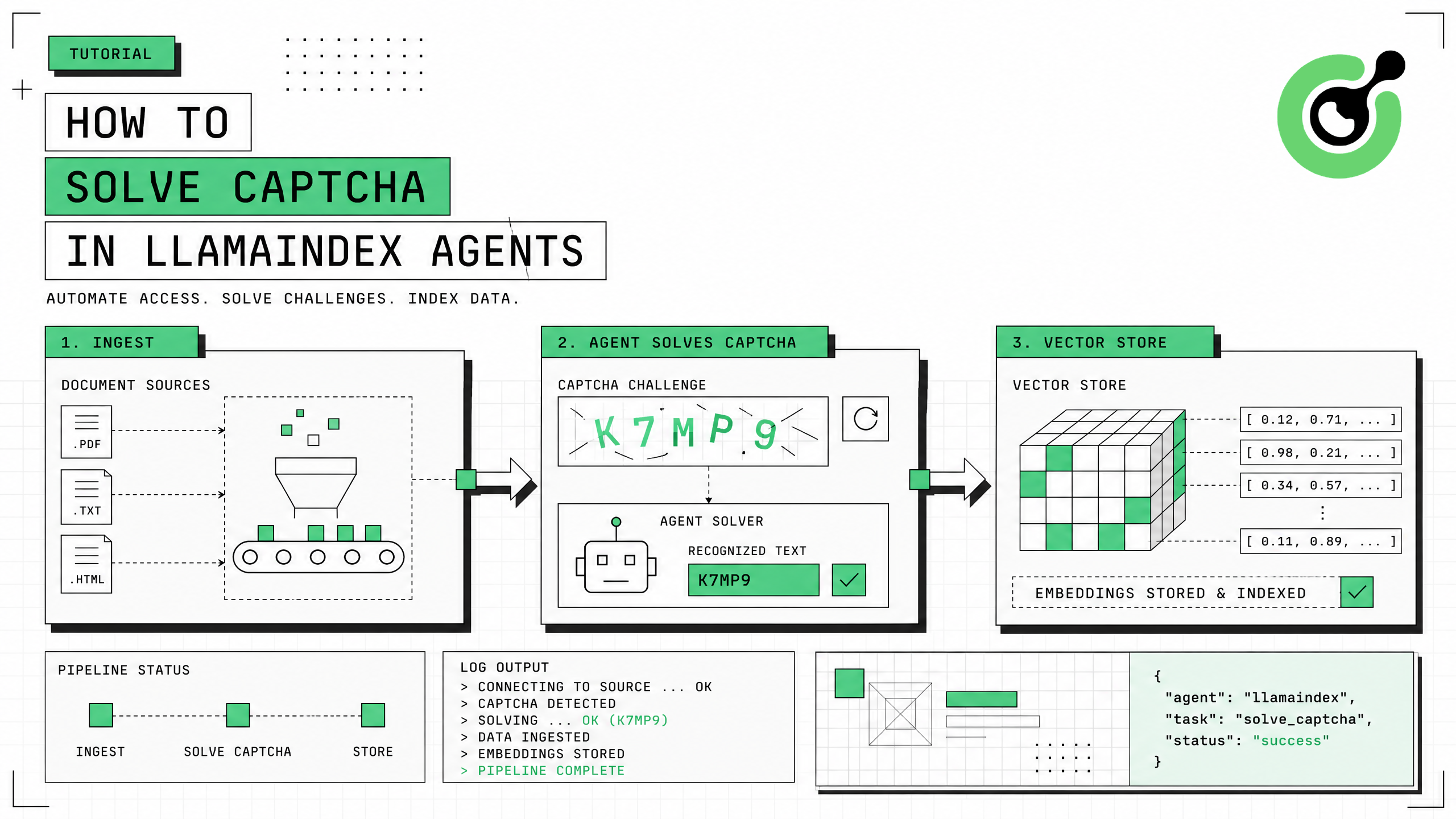
How to Solve CAPTCHA in LlamaIndex Agents
Integrate CAPTCHA solving into LlamaIndex agents using FunctionTool and CapSolver for web data ingestion pipelines.
Ethan Collins
31-Jul-2026
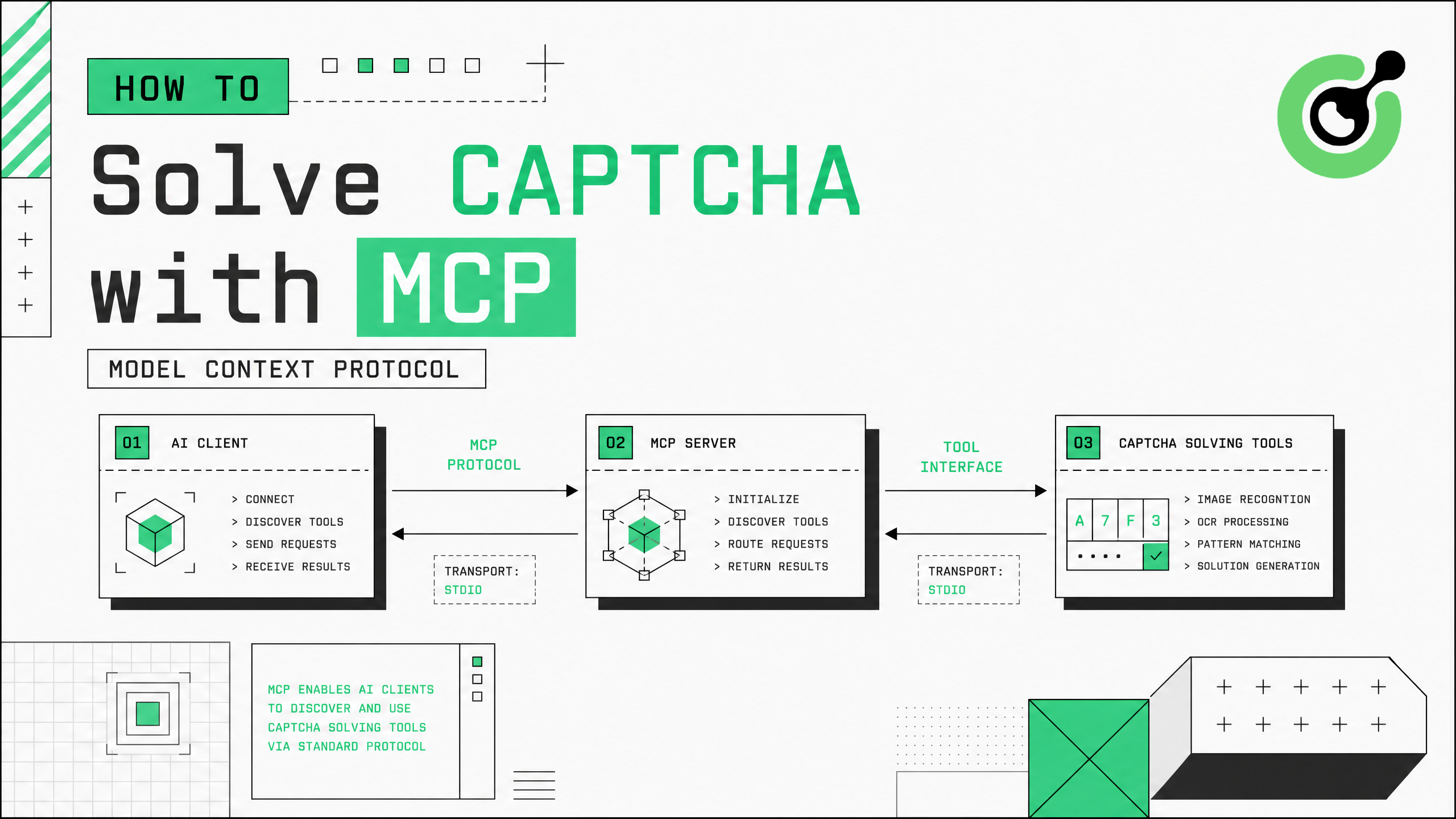
How to Solve CAPTCHA with MCP: CapSolver Model Context Protocol Service
Set up CapSolver MCP service for zero-code CAPTCHA solving in Claude Desktop, Cursor, and any MCP client.
Ethan Collins
31-Jul-2026
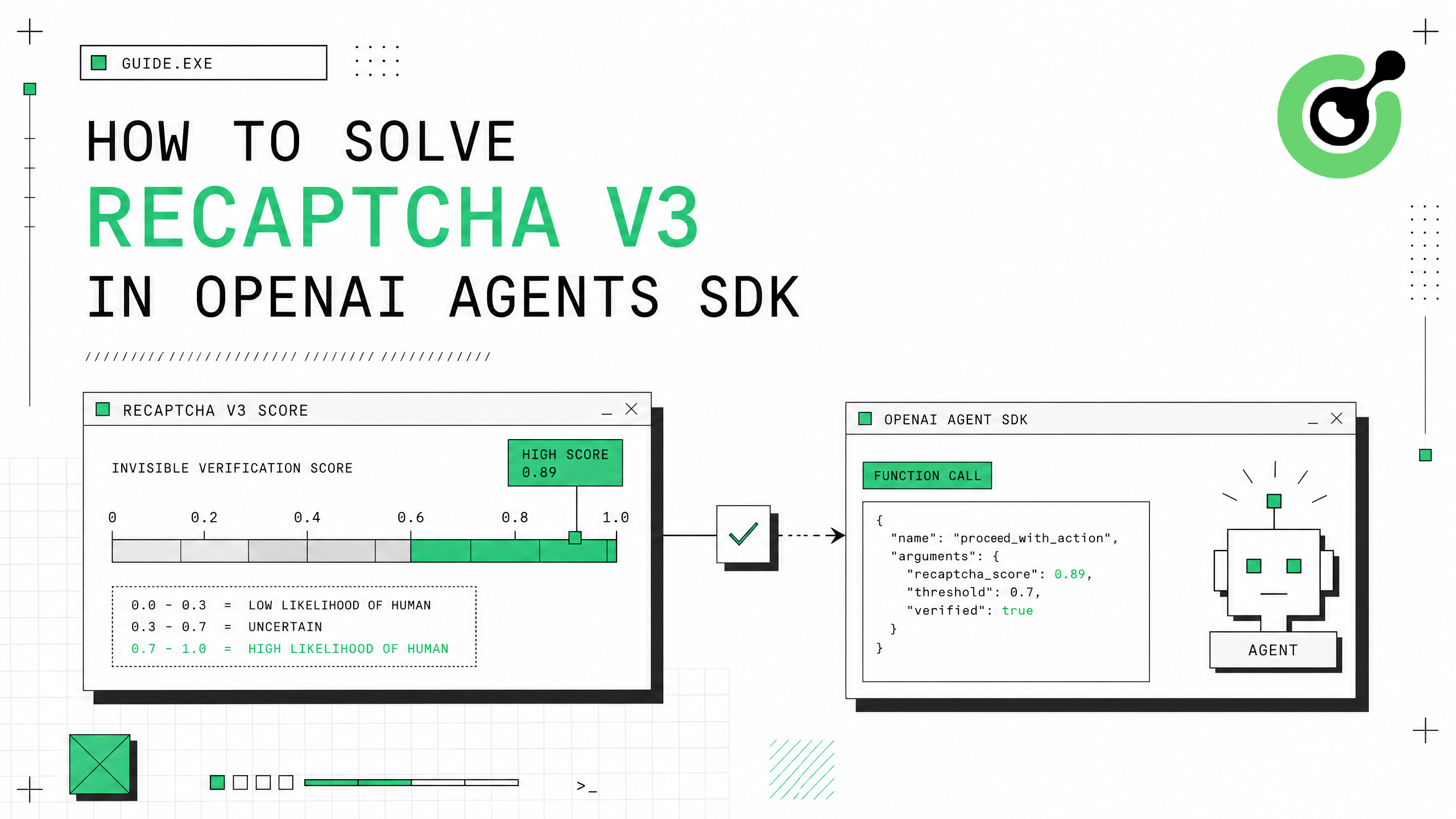
How to Solve reCAPTCHA v3 in OpenAI Agents SDK
Generate high-score reCAPTCHA v3 tokens in OpenAI Agents SDK using CapSolver function_tool.
Ethan Collins
30-Jul-2026
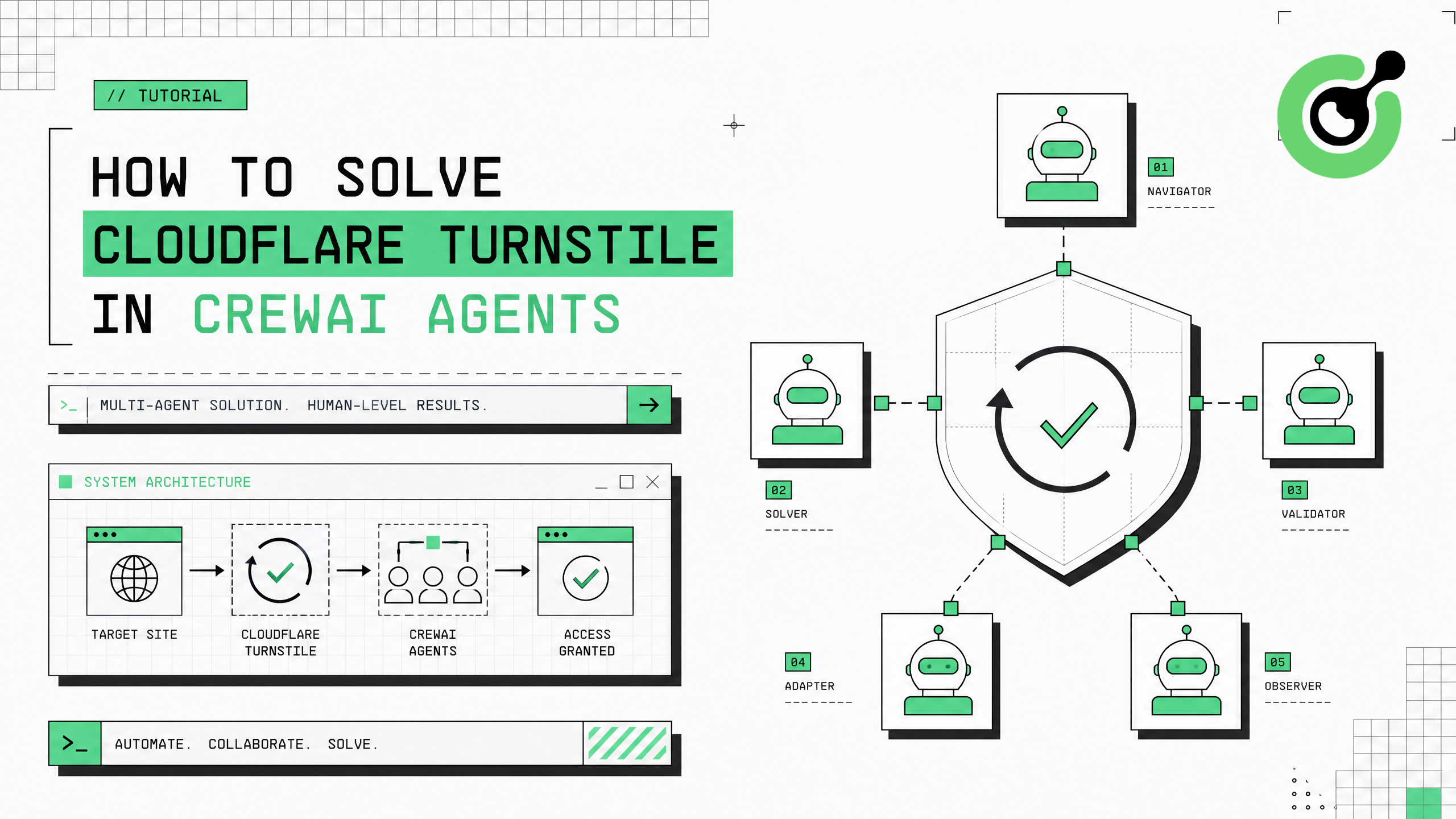
How to Solve Cloudflare Turnstile in CrewAI Agents
Integrate Cloudflare Turnstile solving into CrewAI multi-agent workflows using CapSolver.
Ethan Collins
30-Jul-2026
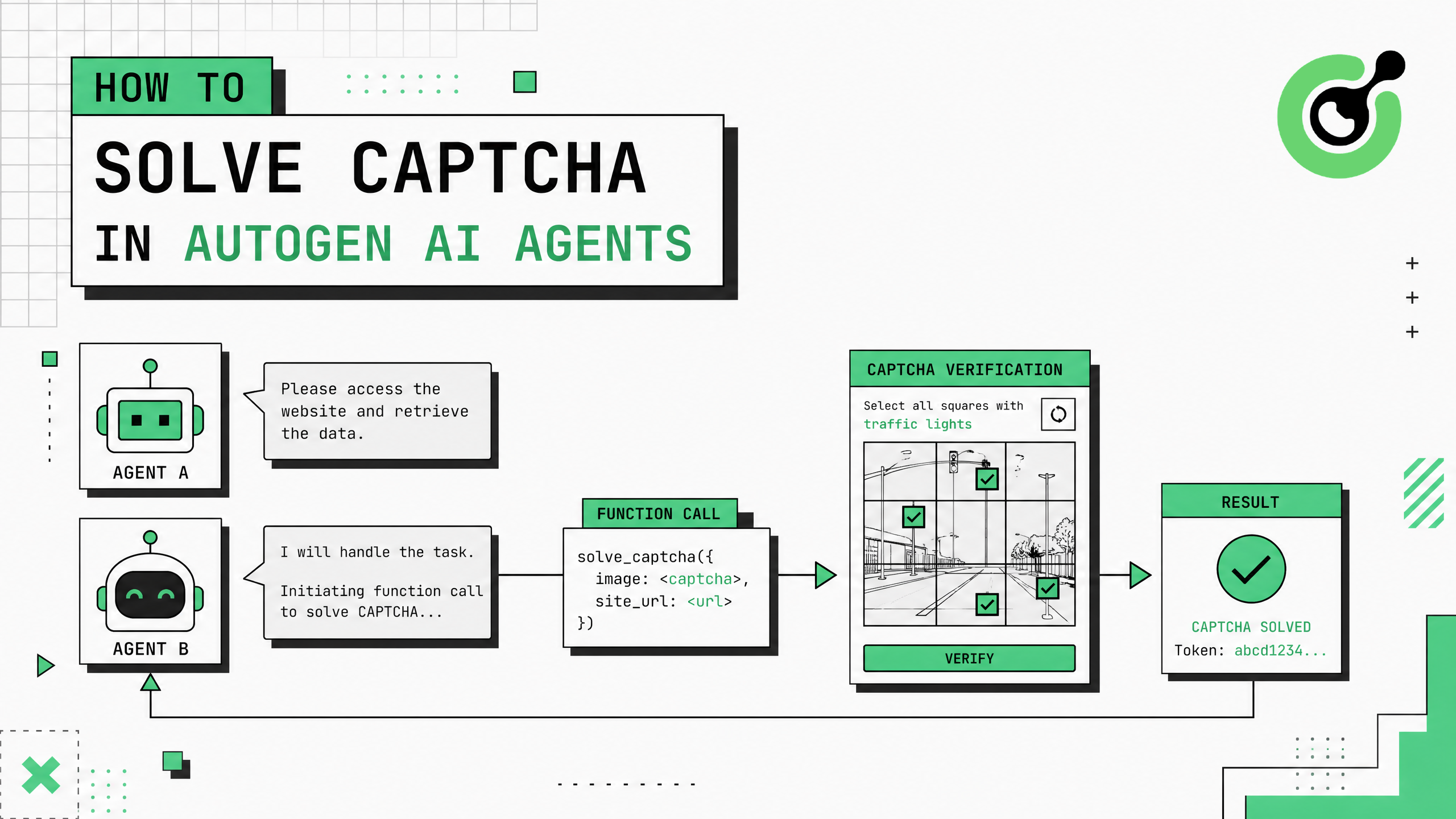
How to Solve CAPTCHA in AutoGen Agents
Complete guide to integrating CAPTCHA solving into Microsoft AutoGen multi-agent conversations using CapSolver with register_function and group chat patterns.
Ethan Collins
29-Jul-2026